
Words by Kenneth Erlandsen
Photos by Kenneth Erlandsen and Mr. and Mrs. Internett
There are plenty of good reasons to subscribe to snowboard magazines from abroad. One of them is that, in the fall issue of American Slush Magazine last year (a magazine I believe every snowboarder should subscribe to), I came across an interview with filmmaker Mia Lambson Brady. She was working on a long-awaited documentary about the role women have played in snowboard history, titled Wayward.
The world premiere took place on December 14, 2025, in Park City, Utah. But what about the rest of the world, and little Norway in particular? When would we get to see Wayward?
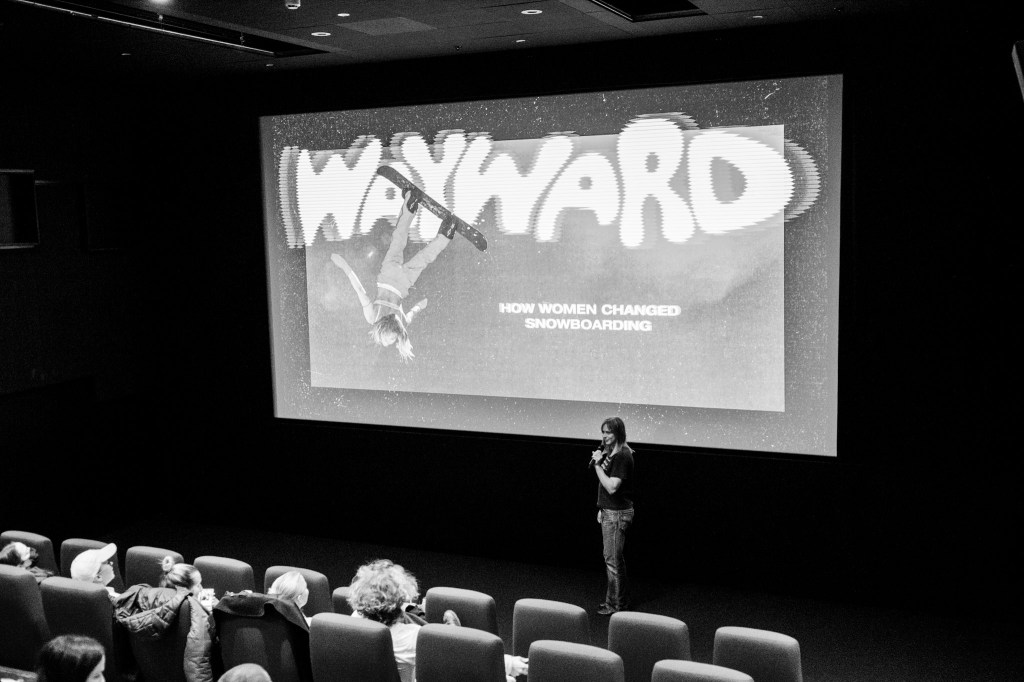
Fast-forward to Wednesday, October 28, 2026, almost a year after its US premiere, and I found myself at Vega Scene in Oslo for the film’s only screening in Norway.
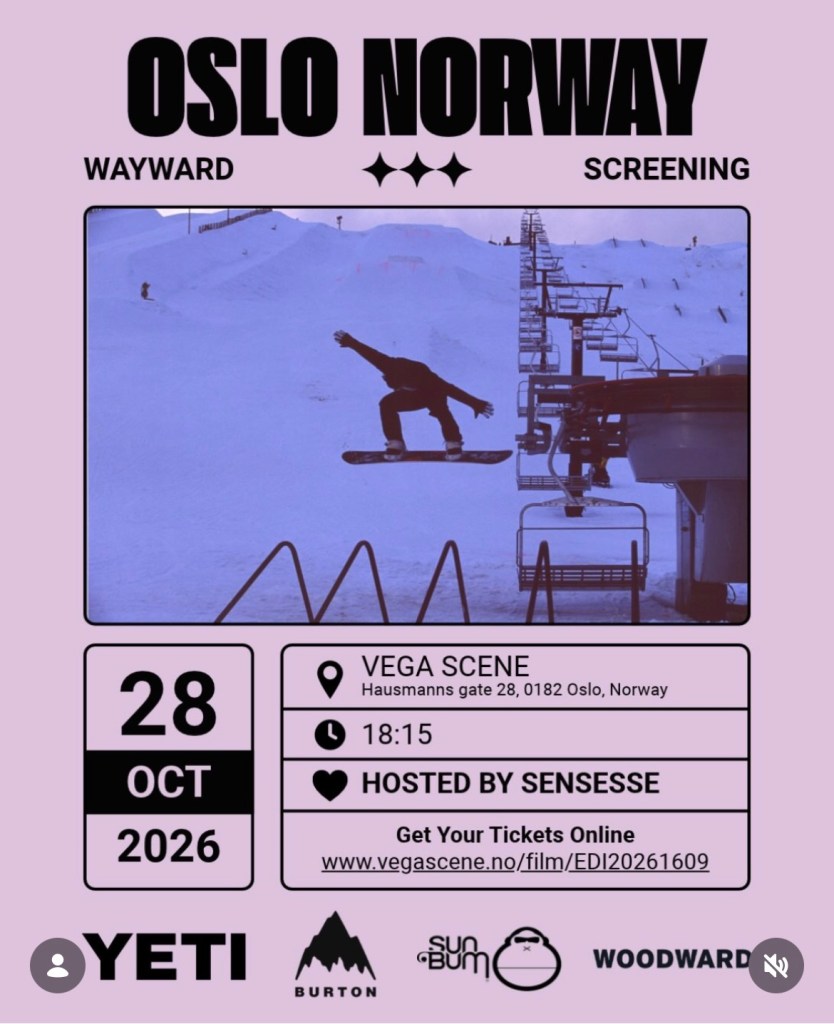
Sensesse + Wayward
There couldn’t have been a better host for the Oslo screening than Sensesse, the Norwegian female collective bringing together snowboarding, art, music and film. Their filmography includes Intense Mini-Shred, Emotional Success and Streetstyle 24, to name just a few of the projects they’ve brought to the screen over the years.
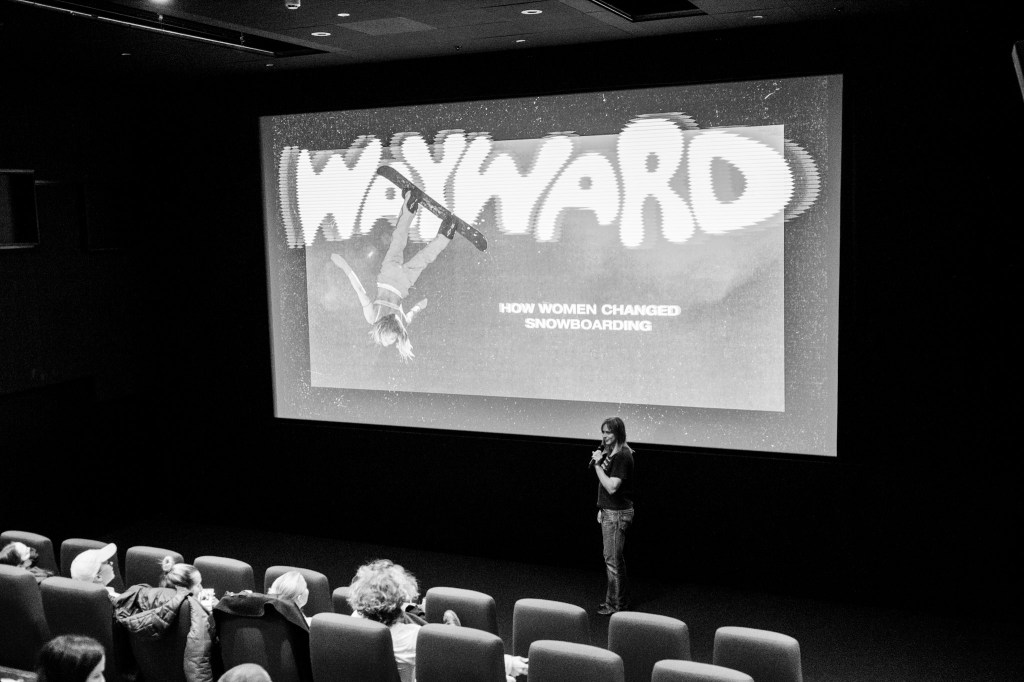
The two driving forces behind the collective are Maria Hilde and Stine Tønnessen. Naturally, both were present in Oslo, where Tønnessen welcomed the audience with a greeting from director Lambson Brady. After the movie they did a Q&A with the audience. The impression is that Sensesse should arrange more screenings like this. This evening was highly appreciated by the audience.
Timelines and profiles
Wayward follows a timeline stretching back to the first female snowboard pioneers of the late 1980s and early 1990s. After one hour and 45 minutes, the film brings the story up to date, taking stock of where women stand in snowboarding in 2026. It’s a smart approach that makes it easy to follow evolution through the different eras the sport has gone through.
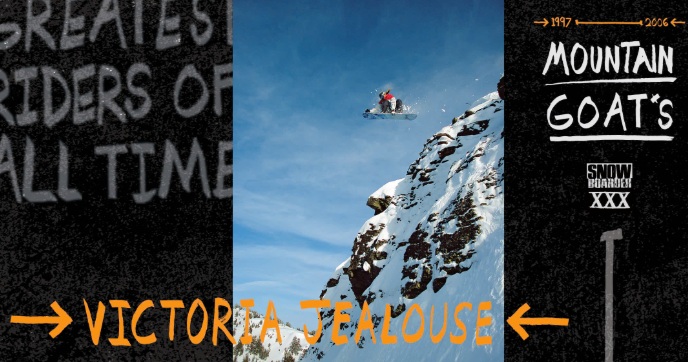
The film is packed with influential women from four decades of snowboarding. For this writer, one of the most heartwarming moments was seeing Victoria Jealouse given the recognition she deserves as the big-mountain pioneer she truly was.
As the first woman to establish herself in Alaska’s big mountains, she naturally earned a place in Standard Films’ legendary TB series throughout the 1990s. Later, she appeared in films from Absinthe Films and Teton Gravity Research. She was also Burton’s most prominent female team rider throughout much of the decade and played an important role in the development of the Burton Feelgood snowboard.
When Snowboarder Magazine launched its Mountain GOATs list in 2017, celebrating the 70 most influential snowboarders between 1987 and 2017, Jealouse was honored with the title “The Most Prolific Female Film Pro of All Time”. Well deserved.
Victoria Jealouse was a one-of-a-kind snowboard pioneer who deserves a documentary of her own. Just throwing that out there as a suggestion for Lambson Brady’s next project.
The power of images and sound
In the fall of 2025, Shannon Dunn-Downing released her excellent autobiography, Snowboard Girl. I’ve previously praised the book on this very fanzine as an important piece of snowboard history in written form.
Wayward tells much of the same story Dunn-Downing shares in her book, only this time through moving images and sound. There is something brutal about hearing the history of women in snowboarding told by the people who experienced the injustice firsthand. Damn, does it hit you in the gut. And it stays with you.
The film’s section about the difference in prize money awarded to women and men competing in the same events, on the same jumps and rails, remains one of the darkest stains on snowboard history. It should never have been allowed to happen, yet it continued for far too many years.
Burton Snowboards deserves credit for being the exception, introducing equal prize money for men and women in the halfpipe at the US Open. Beyond that, unequal prize money was the norm, and it’s shameful.
Director Lambson Brady deserves serious credit for bringing this history into the spotlight. There are plenty of industry people who should be experiencing some serious retrospective shame.
Equally embarrassing is the way the X Games treated female snowboarders for so long. Women competed in Big Air from 1997 to 2001, only to be excluded from the discipline until it returned as a demonstration event at X Games Oslo in 2016. It took some serious lobbying to get women’s Big Air included, even as a trial event. Thanks to everyone who fought to make that happen.
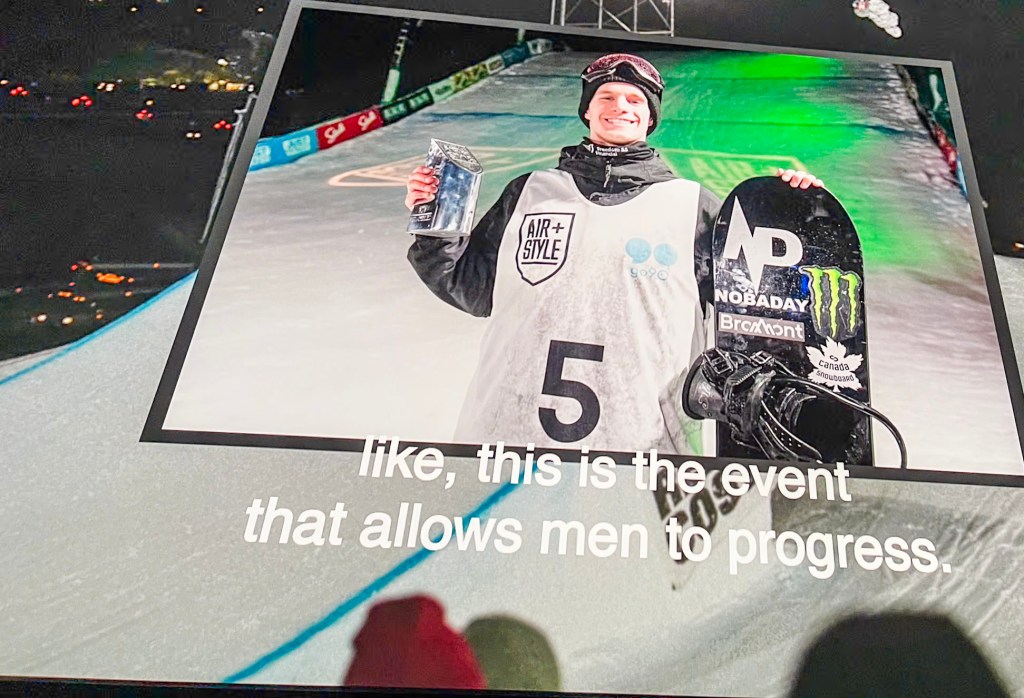
Since Oslo, women’s Big Air has been a permanent part of the X Games programme. About f..ing time.
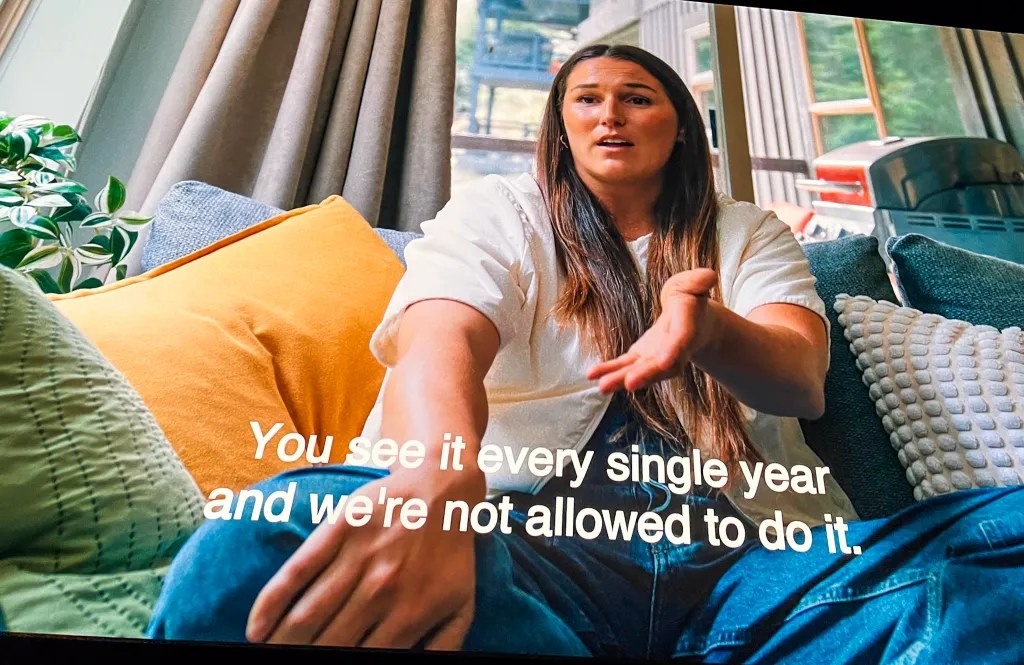
Big Air has since provided a platform for a new generation of stars, including Mia Brookes, Kokomo Murase, Zoi Sadowski-Synnott and Anna Gasser, to name a few. Gasser alone has won five gold medals in the discipline and, in 2018, became the first woman in the world to land a Cab Triple Cork 1260.
You can’t help wondering what the level of women’s Big Air would look like today if female riders hadn’t been kept out of the competitive format for fifteen years.
Clearly, there have been far too many conservative forces within the snowboard industry. It’s a huge contradiction in a culture that loves to promote creativity, inclusion, freedom, play and progression as its core values.
The freeriders
Elena Hight and Robyn Van Gyn are two of my all-time favorite snowboarders, and both get plenty of well-deserved screen time in the film.
They have long since helped prove that good snowboarding has absolutely nothing to do with the gender of the person strapped to the board.
If you haven’t seen Elena Hight’s freeride part in The Ark from 2022, do yourself a favor and watch it immediately. It’s phenomenal.
Robyn Van Gyn’s women’s project, Research & Development, is an annual all-women’s backcountry freestyle snowboarding event and progression platform. What she has managed to build in such a short time, and the impact it has had on female backcountry riders, deserves nothing but respect. Hats off.
The films and the covers
The women-driven snowboard films also get their moment in the spotlight in Wayward.
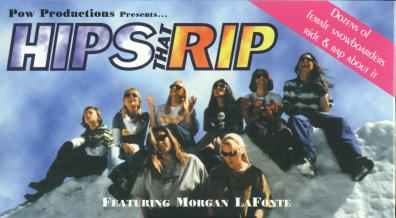
From film pioneer Valerie Steward’s Hips That Rip in 1996, the first dedicated all-women snowboard film, to Jess Kimura’s The Uninvited series, the development has been nothing short of revolutionary.
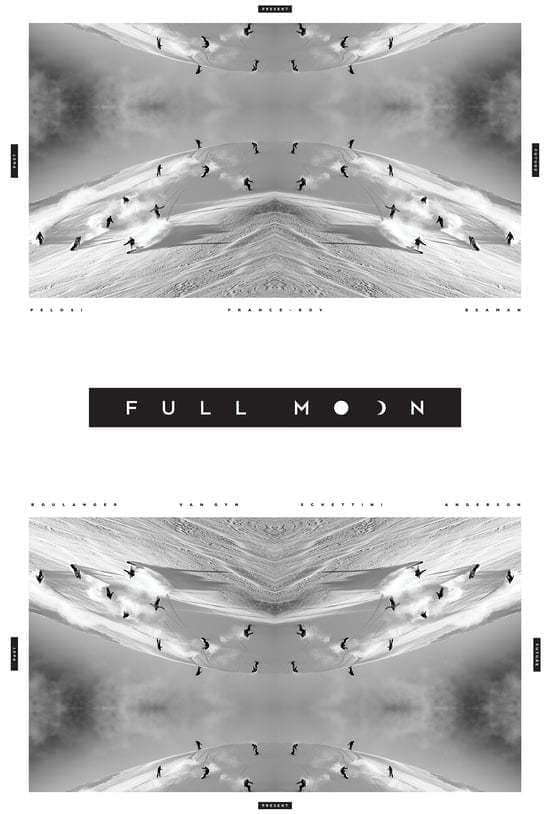
As If, Ro Sham Bo, Peep Show, Winter Wars and Full Moon are just some of the films celebrated along the way. And there are plenty more where those came from.

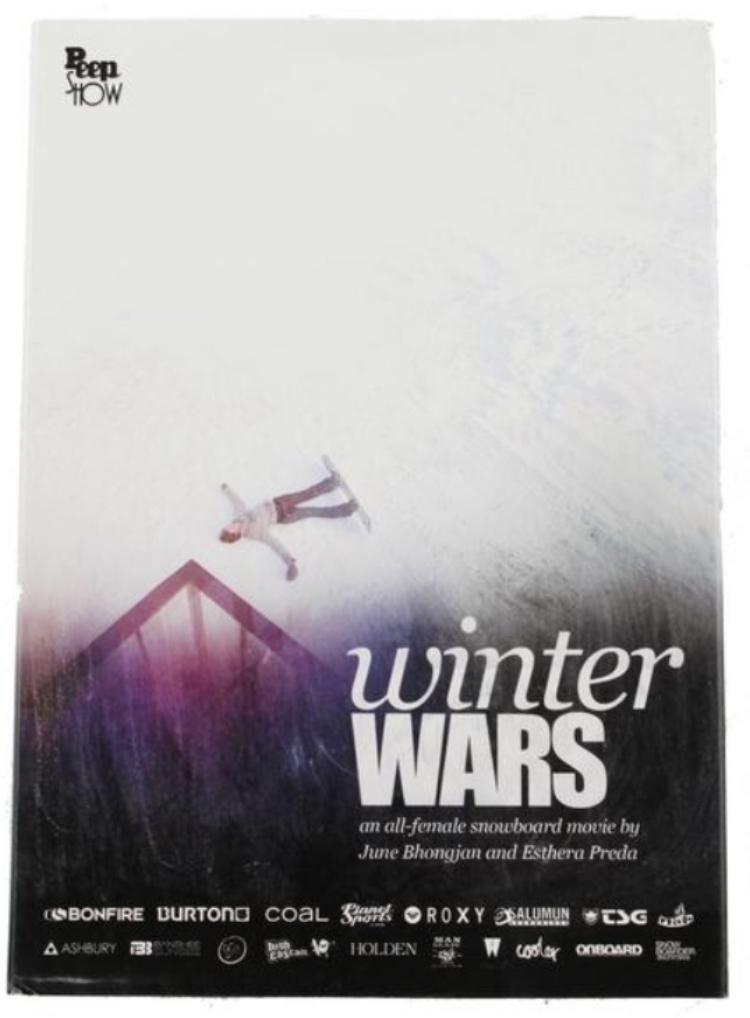
The fact that so many snowboard magazines spent decades featuring almost exclusively men on their covers is scandalous when viewed through a 2026 lens.
Thankfully, things have started to change here as well. Slush Magazine, Thrasher and The Snowboarder’s Journal have all featured more women on their covers in recent years.
As I’m writing this, the latest issue of TSJ has just landed in my mailbox, featuring Anna Gasser on the cover. It’s a photograph that belongs in the top division of snowboard photography and confirms, once and for all, that female snowboarders belong on magazine covers just as much as anyone else.
The future
Wayward closes by focusing on the new generations of female snowboarders who have impressively taken control of their own culture and careers.
There’s plenty to criticise about social media, but for women in snowboarding, Instagram in particular has become a liberating and unifying platform. The film does an excellent job of showing just how powerful that has been.
Despite the snowboard industry’s financial resources being nowhere near what they were during the golden years of the late 1990s, there seems to be a strong momentum behind the women’s movement in snowboarding.
Here in Norway, Ane Gylstrøm’s GRLSHRED project and Sensesse, the collective behind the Oslo screening, are two great examples of that energy.
A MUST-SEE film
Mia Lambson Brady’s Wayward is both an accomplished piece of filmmaking and a culturally important historical document.
The similarities between the way women have been treated in other sports, such as ski jumping and football, and the history of women in snowboarding are striking. That’s why I believe this film offers such important historical lessons that its message should resonate far beyond the snowboard industry.
Wayward deserves to become essential viewing in secondary schools. For snowboarders, it’s 100 per cent compulsory viewing. If you don’t know this part of snowboard history, you don’t know your own cultural history. And you should.
Sensesse for President
Sensesse deserves a huge amount of credit for bringing Wayward to Norway. That’s why it was such a shame that more people didn’t show up for the screening. The auditorium was only a little over half full, and the audience was predominantly female, with a few exceptions of the male variety.
“Where the fuck were all the guys tonight?” someone asked over the microphone during the post-screening Q&A.
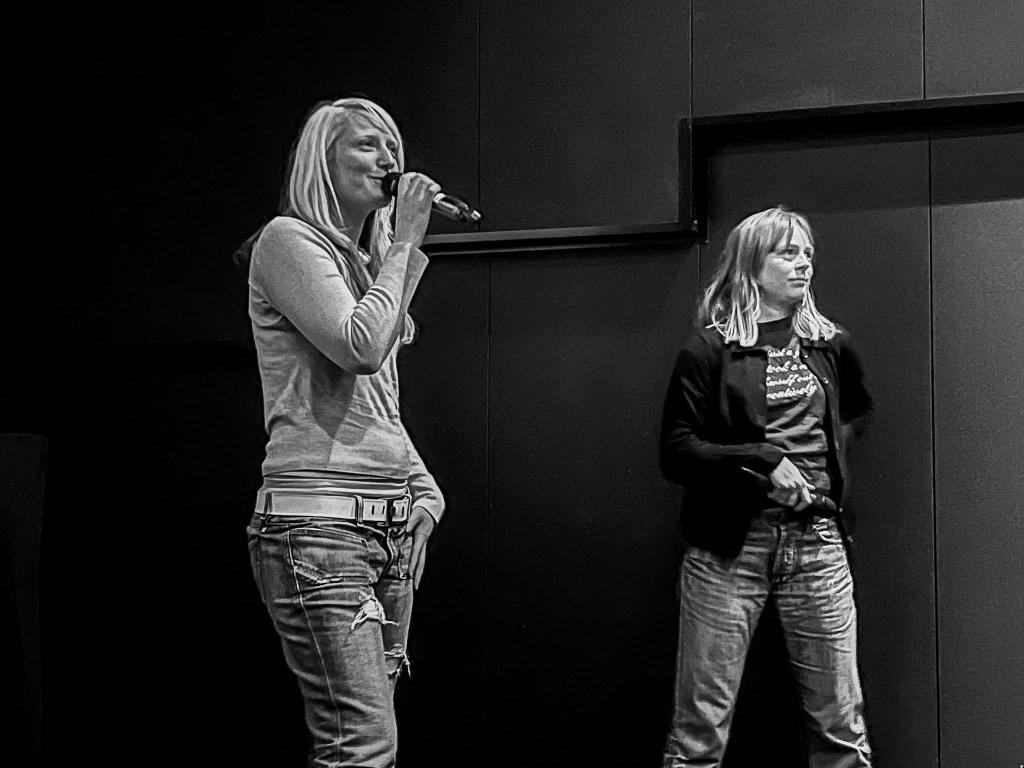
A question that perfectly reflected the film’s central theme. Because where the fuck have you guys been all these years? You who should have stood up for your female colleagues, taken the initiative to split prize money 50-50, challenged sponsors about the lack of women on team rosters, and made sure women were included in film projects?
Sure, maybe I’m being a little harsh here. But that’s because I’ve seen Wayward. You should watch it too. I have a feeling you’ll agree with me.


Leave a Reply