

Book review
Words – Kenneth Erlandsen
Photos – Chad Otterstrom
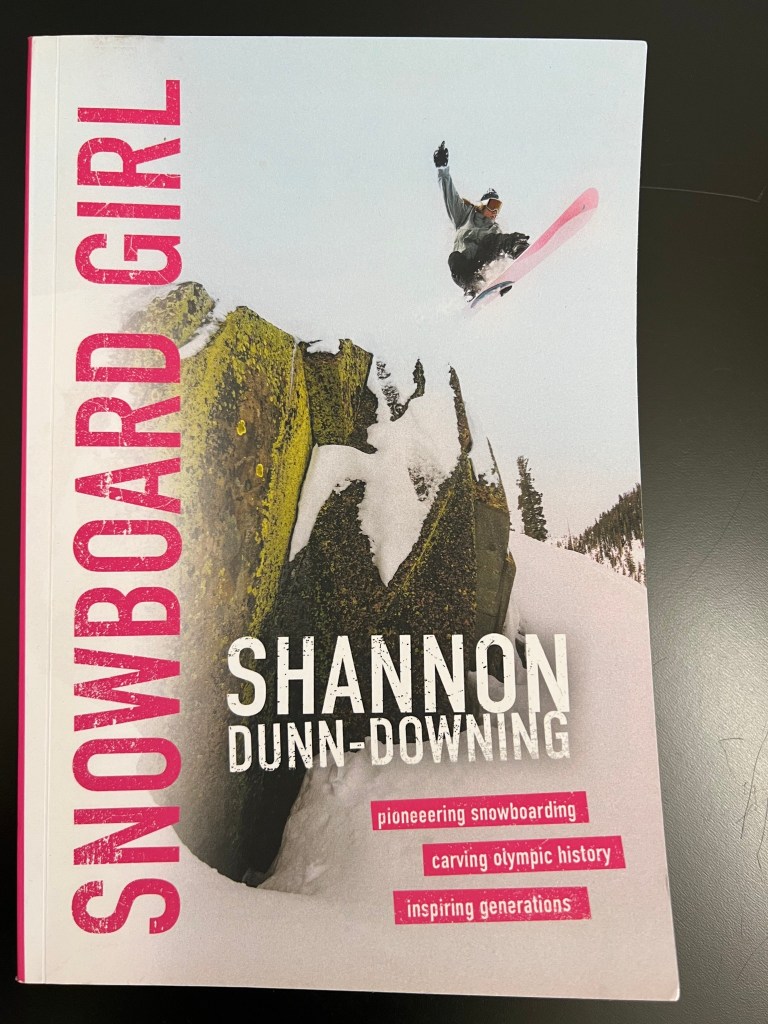
Is the autobiography of American snowboard pioneer Shannon Dunn-Downing also one of the most important historical documents in snowboarding? After reading Snowboard Girl, my answer is yes.
The book opens with a smart narrative device set in the present, where the author’s sons discover that their mother was once a famous professional snowboarder. From there, the story rewinds to Dunn-Downing’s first encounter with snowboarding and the infatuation that would shape her entire life. Her descriptions of the sport’s formative years in the 1990s are instantly recognizable and richly nostalgic for anyone who started riding around the same time.
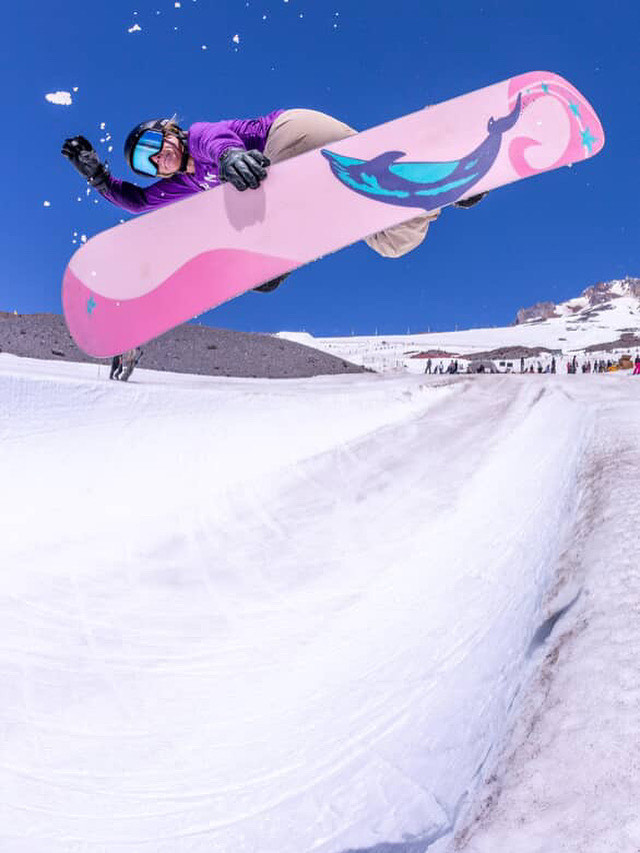
One of the book’s strongest chapters covers her years as a professional rider for Sims Snowboards, where Dunn-Downing was behind the world’s first female pro model — the iconic Sunflower board, now exhibited at the Smithsonian Institution. The predominantly male leadership at Sims had so little faith in the project that marketing director Gaylene Nagel had to provide a personal financial guarantee to make production possible. When the board was released in 1994, it outsold every other Sims model combined and permanently changed the industry’s perception of the need for women-specific snowboards.
Dunn-Downing then turns to her years as a nomadic professional snowboarder, often traveling with fellow pioneer Tina Basich-Haller. During a photo shoot in the Italian Alps, she meets Burton team rider Dave Downing, who later becomes her husband. The way their relationship develops over years of travel, competition, and separation is genuinely moving.
Resistance was the norm for women in the snowboard industry during the 1990s. Equipment and apparel were designed by and for men, prize money was unevenly distributed, and women’s participation in competitions was far from guaranteed. Together with Basich-Haller and other women in the industry, Dunn-Downing helped change this — both by pushing for better gear and by forcing entry into prestigious competitions such as Air & Style in Innsbruck. In that case, they had to sneak into the event because organizers claimed the jump was too dangerous for women. This kind of activism proved necessary for women to claim their rightful place on the sport’s biggest stages.
The book’s most compelling section is the account of Dunn-Downing’s move from Sims to Burton and the negotiations surrounding it. It is a rare and unflinching portrayal of brutal contract negotiations, centered on money and gender roles within the snowboard industry, and a portrait of an athlete keenly aware of her own market value. Here too, Dunn-Downing emerges as a pioneer who helped make life easier for the women who followed her into the industry.
Dunn-Downing also writes vividly about the founding of Boarding for Breast Cancer (B4BC) in 1996, which she and Basich-Haller established after losing a friend to breast cancer. This chapter doubles as a portrait of how subcultures could grow alongside mainstream society in the 1990s, before social media and mobile phones existed. The legendary fundraiser where the Beastie Boys played under a pseudonym to support B4BC drew tens of thousands of people, fueled solely by rumors and word of mouth. Reading this chapter, it is impossible not to feel a certain longing for aspects of the 1990s.

Snowboard Girl is not only the story of a single athlete, but of the rise of snowboarding as a cultural phenomenon during the industry’s golden era — the 1990s, when snowboarding evolved from an underground movement into a global industry, and when women had to fight relentlessly for their rightful place in the sport.
Shannon Dunn-Downing’s literary debut is an exceptionally well-written book, told from the inside by someone who helped shape snowboard history — and who continues to leave her mark on the culture in 2026.
At 300 pages, Snowboard Girl is a substantial work of modern winter sports history and deserves a place on reading lists wherever sports studies are taught.
A must read for 2026.
———————————————————————–
About the author
Shannon Dunn-Downing (born 1972) is an American snowboard pioneer and former professional athlete. She won bronze in halfpipe at the 1998 Nagano Winter Olympics, becoming the first American to win an Olympic medal in snowboarding. She played a central role in the sport’s technical development, including becoming the first woman to land several groundbreaking halfpipe tricks in competition.
Dunn-Downing was also the first woman to release a women’s signature snowboard model, helping transform the snowboard industry and open the market for women-specific products. She is a co-founder of Boarding for Breast Cancer and was inducted into the Colorado Snowsports Hall of Fame in 2016 and the U.S. Ski and Snowboard Hall of Fame in 2022.
Photos – Chad Otterstrom

 27 - 9
Leave a comment