
Karaoke, curses and a secret right-hander on the Gold Coast
Words by Tommy Langseth and Jørgen Andvig
Photos by Tommy Langseth, Jørgen Andvig and Brett Davies
“Mami Wata is not here,” the voodoo priest in the small village of Nogokpo says sternly. For four days we’ve surfed a perfect right-hander on our own. Warm water. Shoulder to head high. A surfer’s dream. But now the forecast shows the swell is dropping. We’ve been reading up on voodoo, the religion of a quarter of the population here in Ghana’s Volta Region. Voodoo originated here in West Africa; the Haitian version we know from Hollywood was brought over by slaves from this region and blended with Catholicism. But here in Volta, voodoo is part of everyday life, and we’ve read that this religion has a water spirit called Mami Wata. Being fundamentalist atheists, we don’t actually believe that a prayer and some schnapps, which we’ve been told to bring to the shrine, will help summon the surf. But we’re in a curious mood, and since we’ve agreed to write for 27-9, we figure it could make a fun story. It never occurred to us that it, despite our atheism, would get genuinely uncomfortable.
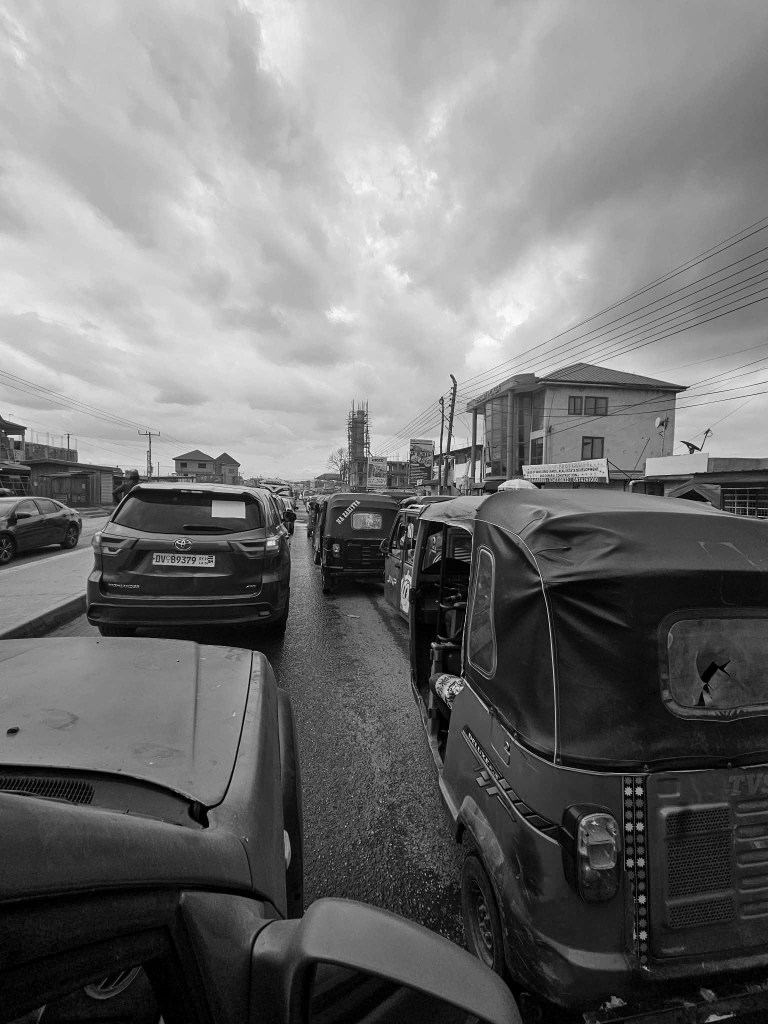
About a week earlier we were sitting in a car on the way from Accra International Airport to Kokrobite Beach, counting our blessings that we weren’t the ones driving. Even though the driver fell asleep twice along the way, he did a lot better than we would have in traffic where the direction of travel is optional and livestock and roadside spare-parts sellers make frequent appearances in between massive “Despot-Cruiser” 4x4s and their nimble tuk-tuk counterparts. Spare parts, incidentally, seem to be an inexhaustible market here, since anything not held together with duct tape is bound to shake loose sooner or later.
A few months earlier, shocked by car rental prices in Ghana, we’d decided to do something we’d never done before: hire a surf guide. Brett Davies, a British expat, former semi-pro surfer, and wetsuit salesman, has been based in Ghana since 2007. He runs Mr Bright’s Surf School in Kokrobite on the outskirts of Accra, and has started several initiatives to give locals access to surf gear so they can make the most of the varied menu of waves that the south-facing coast of West Africa has to offer. He’ll take us on a weeklong guided tour for just about the same as it would have cost to rent a decent car for the same period. We had been eyeing Ghana as a surf destination for some time, hearing rumors of uncrowded, tropical waves. When the opportunity arose to fly in for a 12-day trip in early September, we decided to take a chance. Trawling the internet, we found descriptions of mellow beach breaks and hidden gems, with one particular setup making several appearances with the alluring combination of a glassy, razor-edge peeler breaking over a sandy bottom and hardly any other surfers in sight. Every surfer’s wet dream—but the location is, of course, a well-kept secret. Our original plan was to spend the first week with Brett as our guide, then once we’d have it all figured out, we would just get to where the waves were pumping and shred to our hearts’ content. Right…
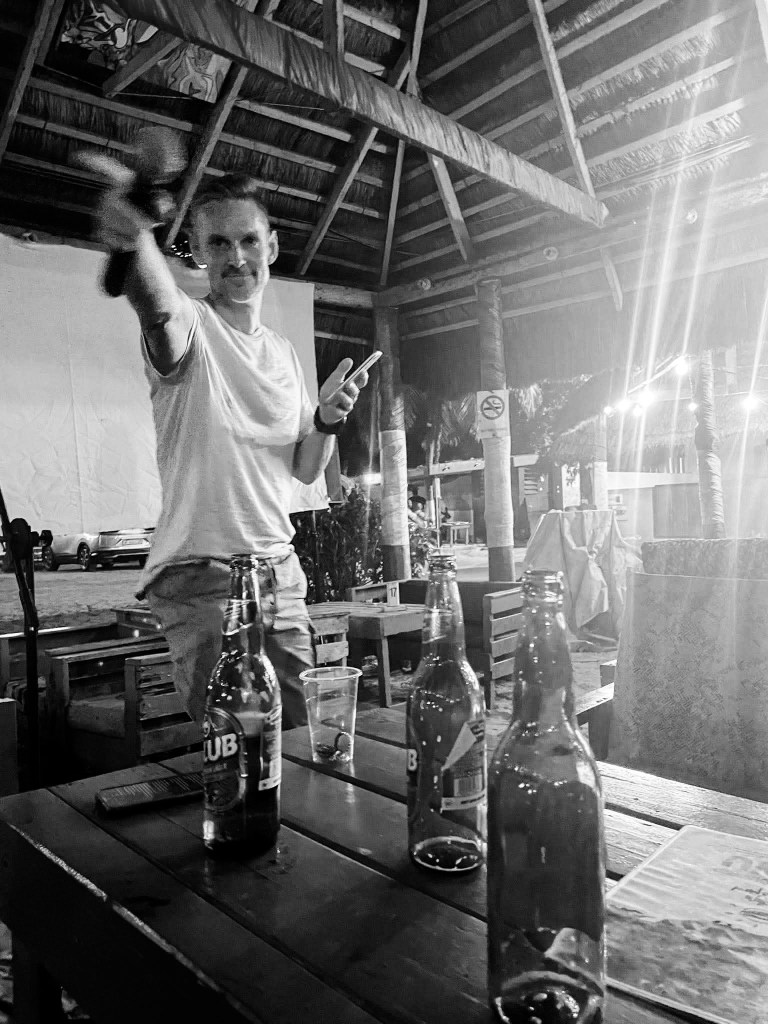
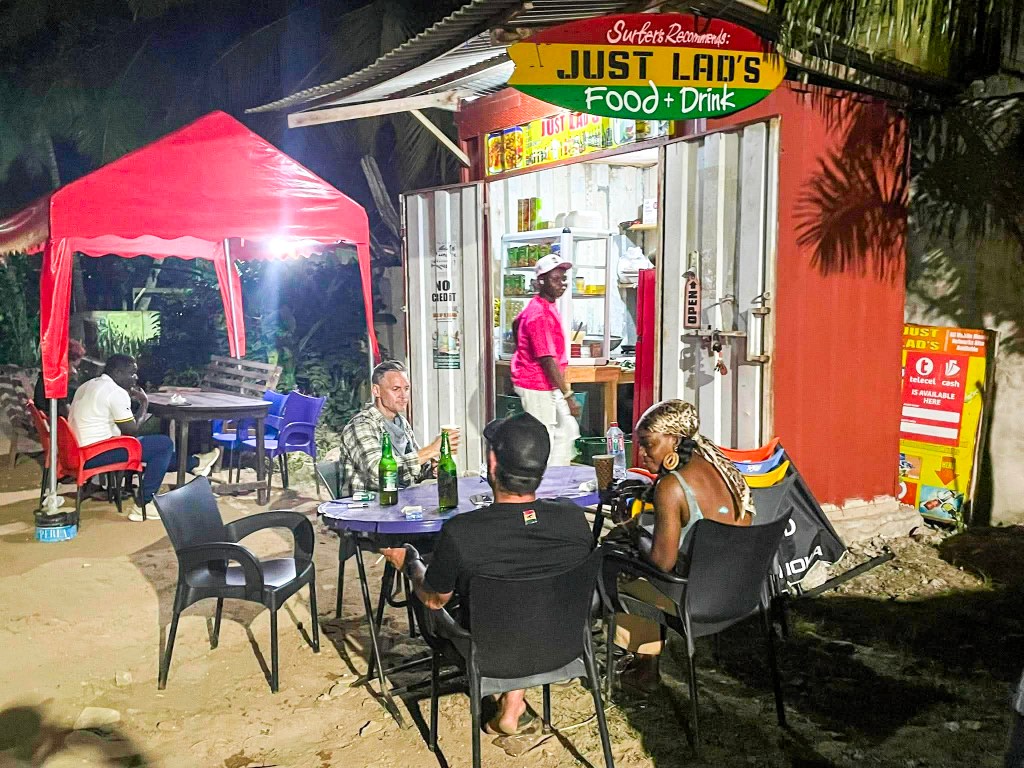
Having been scammed out of a few hundred Cedis by the self appointed chief of security before we even left the airport we were happy to make it from the airport to Big Milly’s Backyard at Kokrobite Beach without further incident. Big Milly, incidentally, is not as intimidating as she may sound – a sweet little lady who runs a decent hotel literal steps from the sand. The first few days there are hardly any waves, so Brett suggests we postpone the planned tour of the more remote spots, especially since the swell that’s moving up the coast of southern Africa just might be spot on to hit a fickle, but potentially epic spot that happens to be two days drive in the opposite direction of the more well known spots west of Accra. We surf some mediocre beach break in Kokrobite, but mostly we enjoy warm weather, cold beer and sing karaoke. Jørgen savours a moment of fame and scores a six out of six for his version of Tom Jones’ “It’s Not Unusual”, but according to a local talent scout, the hip movements aren’t quite there: two out of six. She does, however, see potential, and offers to marry him if he takes dance lessons. He politely declines the lessons. The bar at Big Milly’s is open 24 hours a day. The nights run late. Always one more for the road.
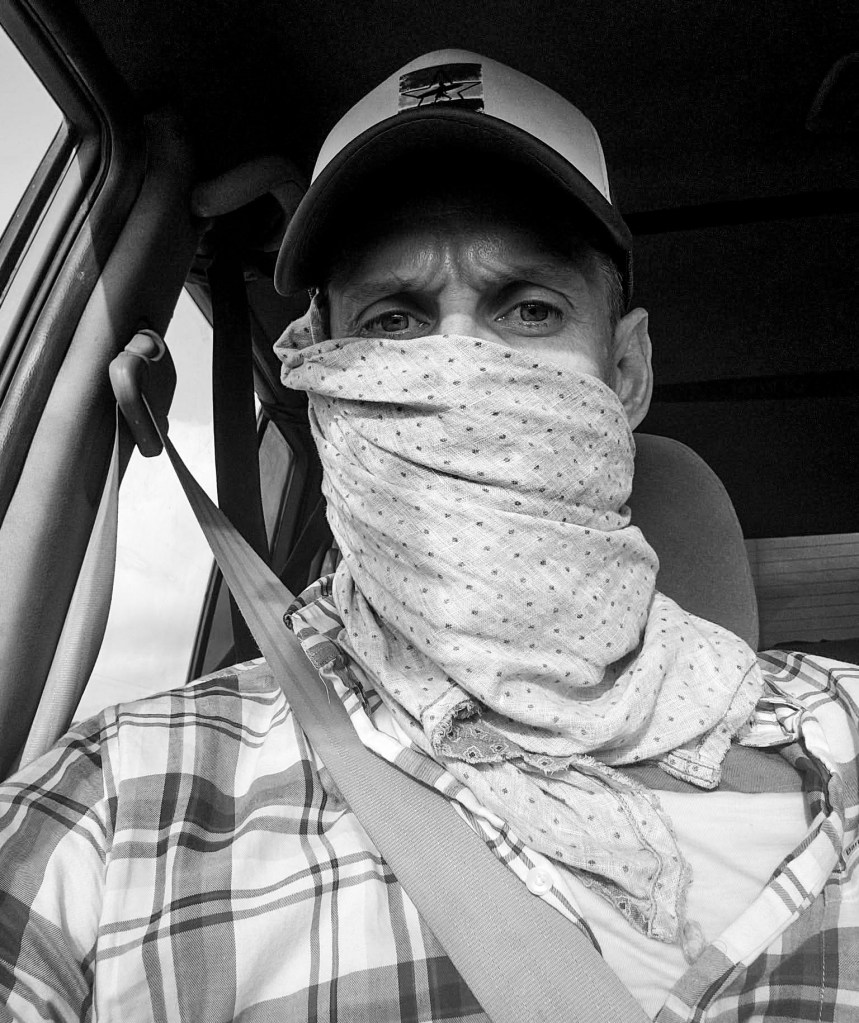
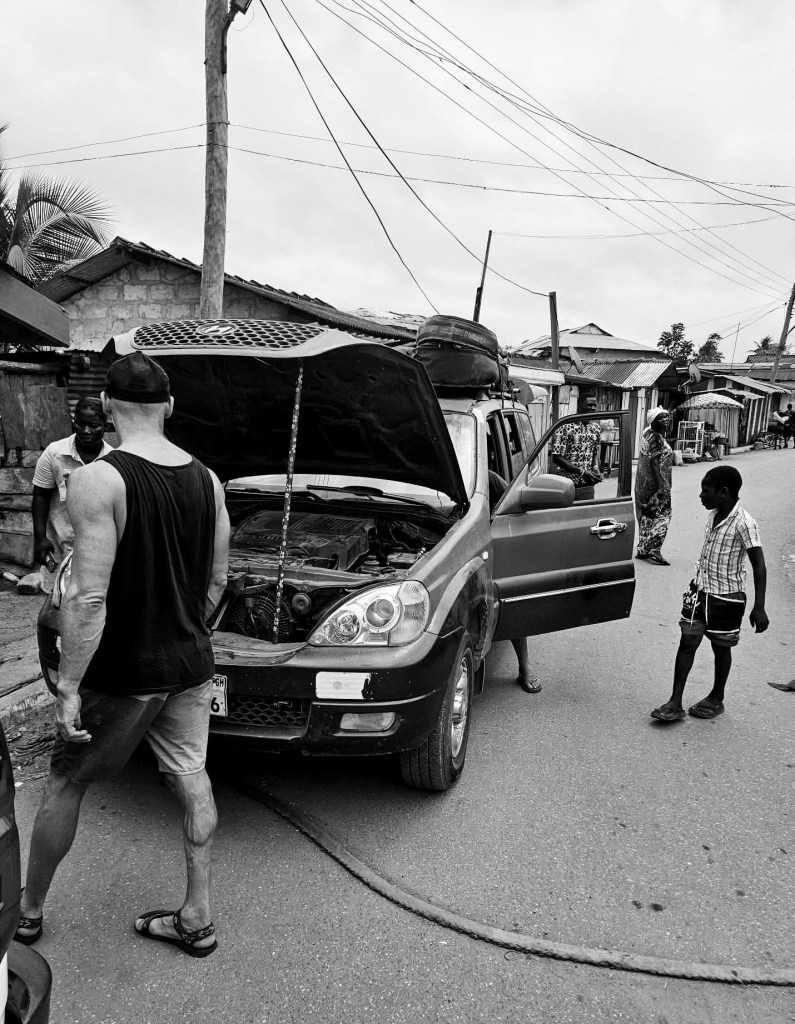
After a few days of karaoke, reggae night, highlife music mixed with multiple displays of local dance and acrobatics, we head east. A southerly swell with a touch of east in it means there’s a chance that the wave we’ve been dreaming about since we started planning the trip might start working. That mythical right hand sand-bottom point break that nobody really wants to give away. To avoid the traffic, we leave Kokrobite at four in the morning. The sleepy taxi driver who picked us up at the airport has been swapped for Mr Bright himself. We feel fairly confident he has taken some kind of driving course at some point, so safety should be taken care of. There’s a little less traffic than in the middle of the day, but we’re still more or less at a standstill whenever we pass anything resembling a town. Scattered along the highways are police checkpoints about every 30km, so our guide’s knowledge of how to maneuver the local law enforcement in their quest for a fistful of Cedis is invaluable for a couple of Norwegian wave hunters. The driving part of the hunt is the least attractive part of travelling in Ghana. Road conditions are a mix of once paved – now moon crater potholes, and Mad Max style dust bonanza. Brett’s car has no air conditioning and the engine has an undiagnosed issue turning the cabin into a veritable dry sauna. The thermometer on Tommy’s smartwatch reads 40 degrees. Without a working fan, every window has to stay open so we don’t end our days sous vide. That means a free flow of dust, noise, smells and sun through the car, with the occasional appearance of the aforementioned livestock and street vendors. On the positive side: we really get to inhale all that Ghana has to offer.
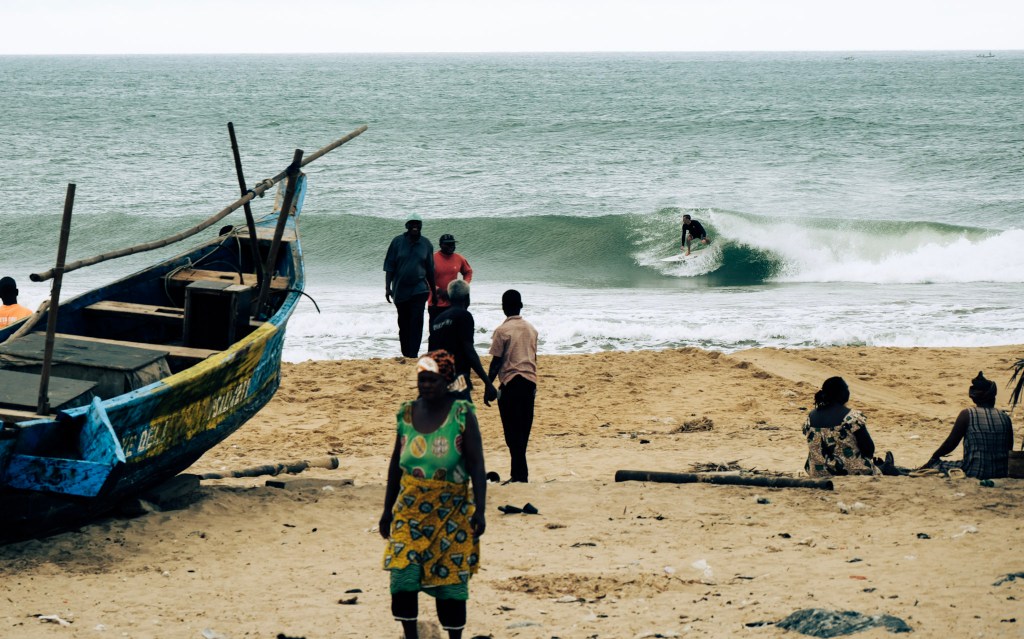
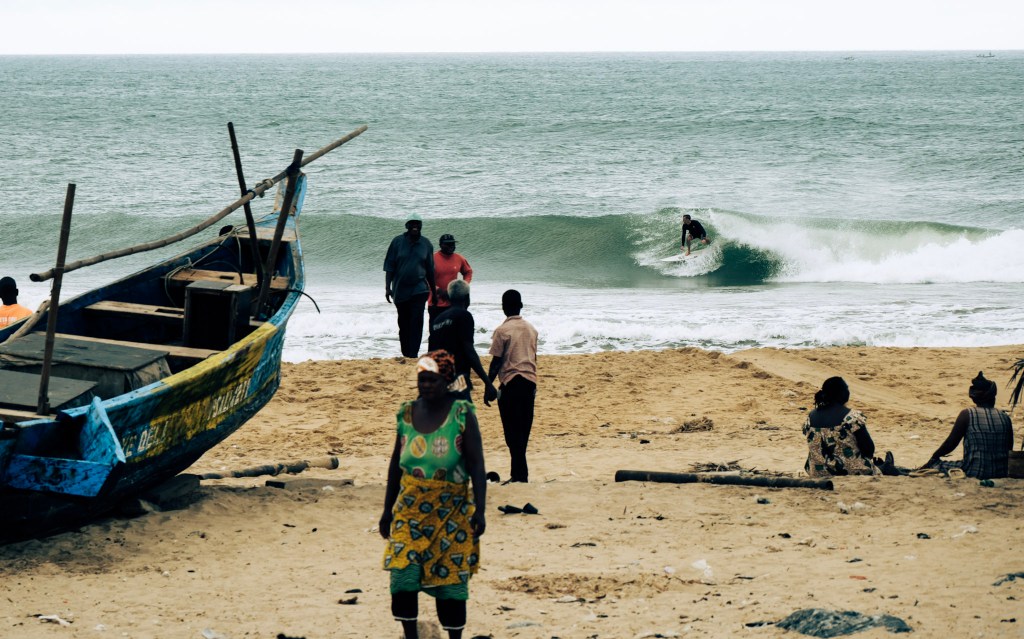
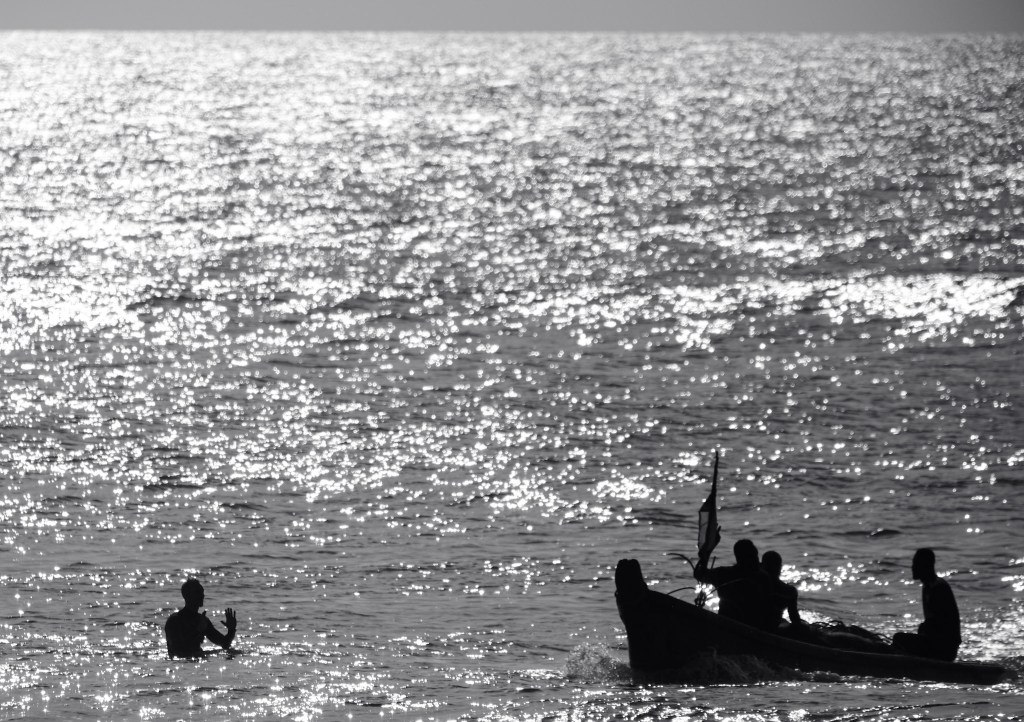
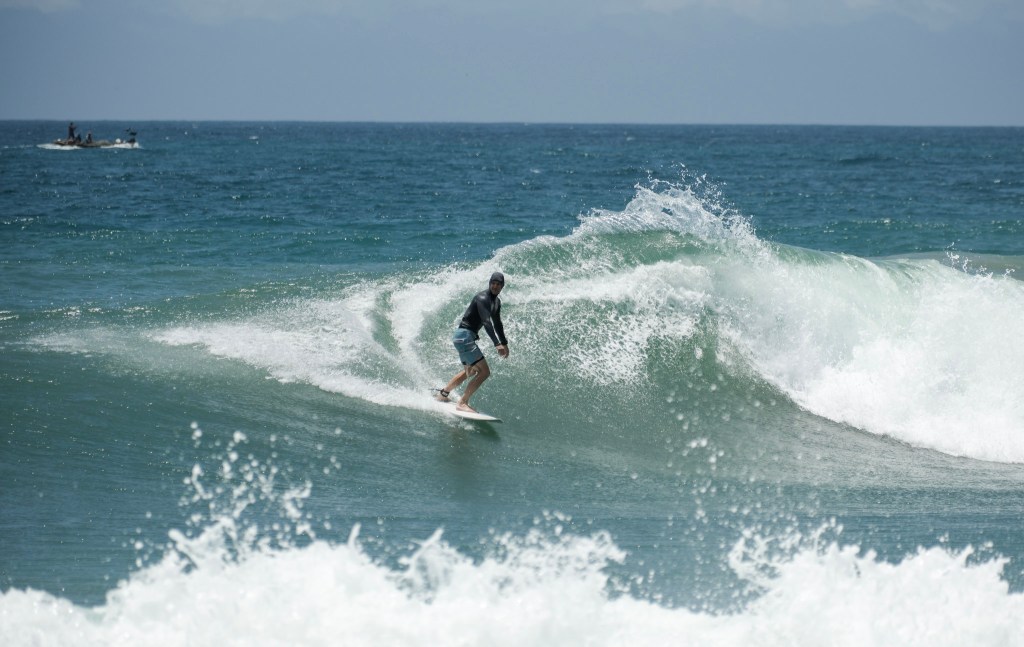
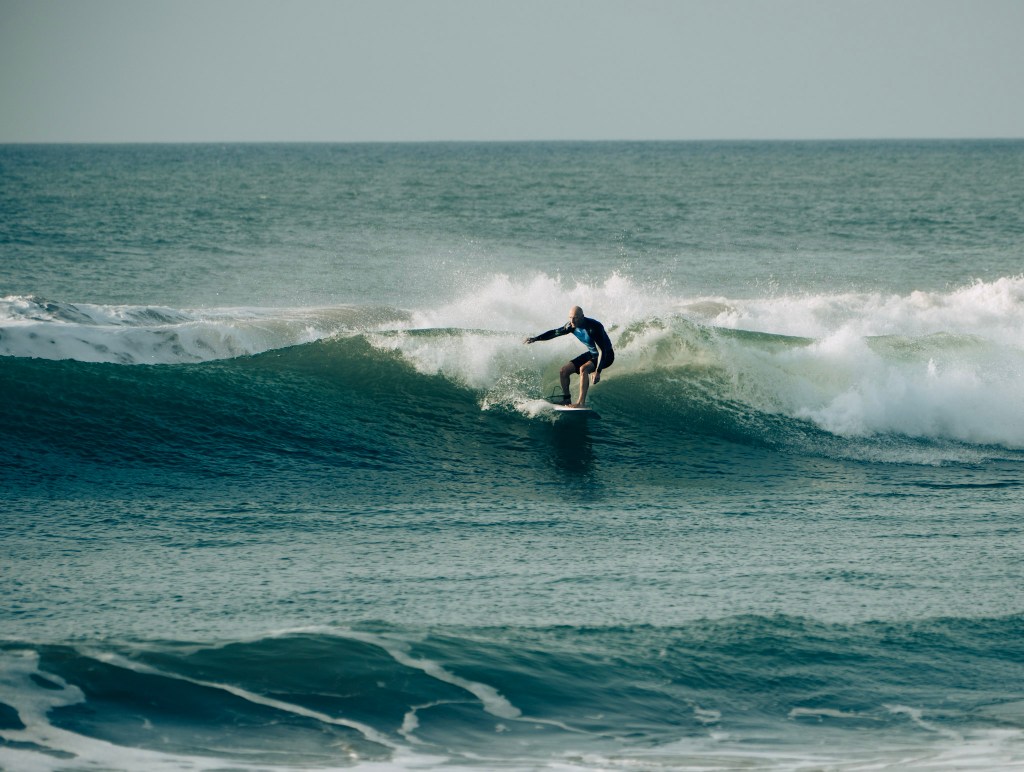
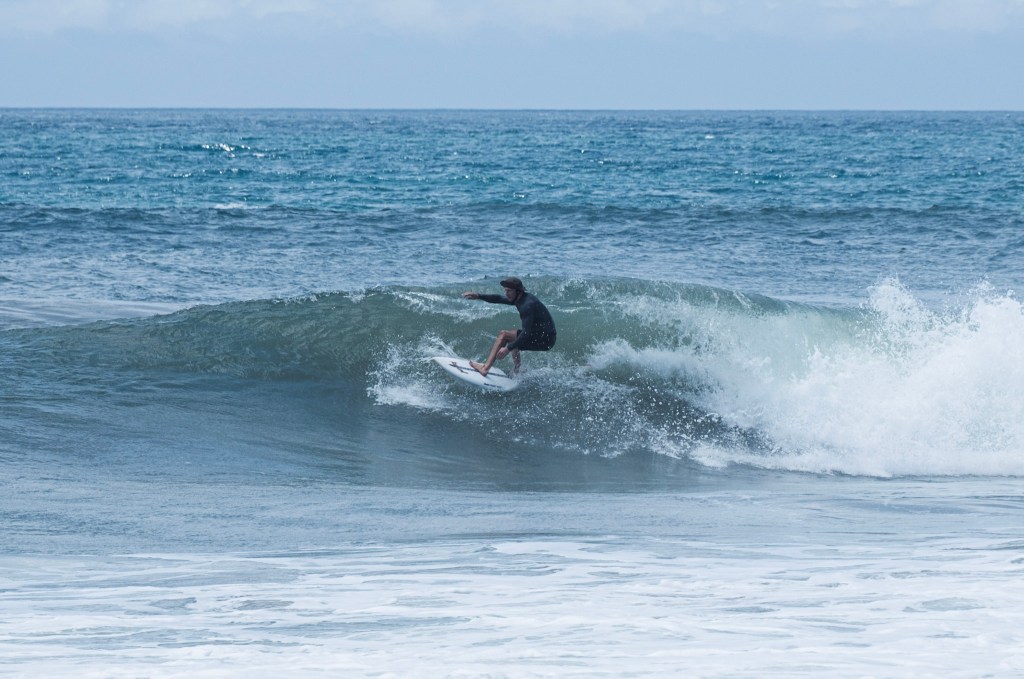
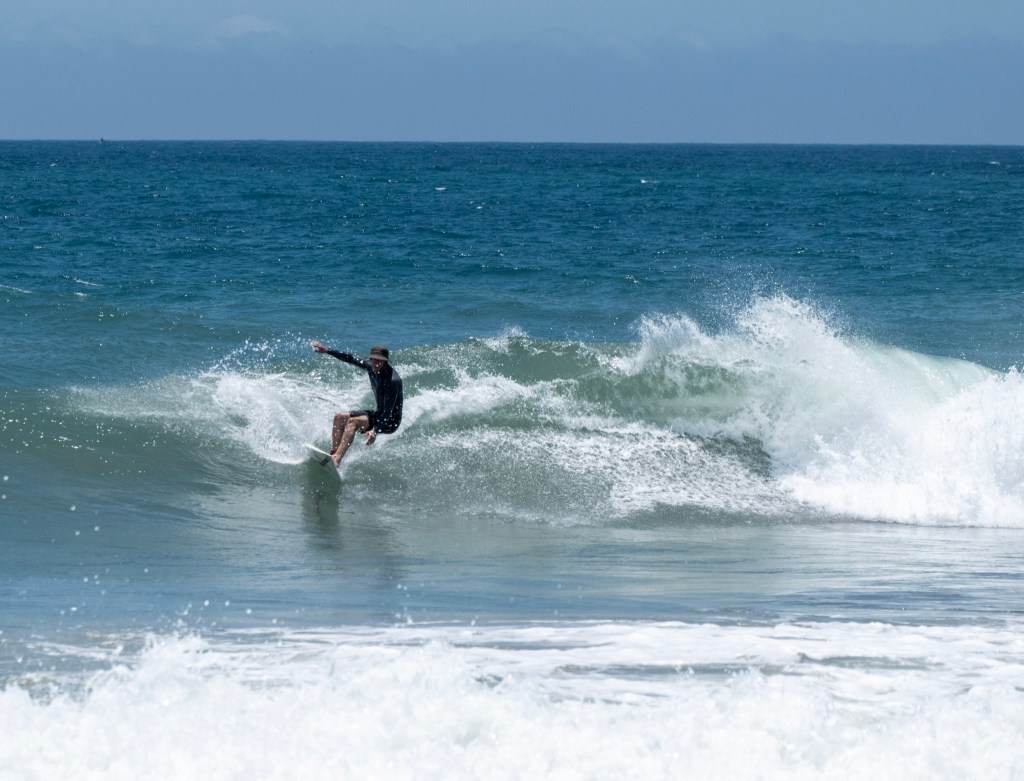
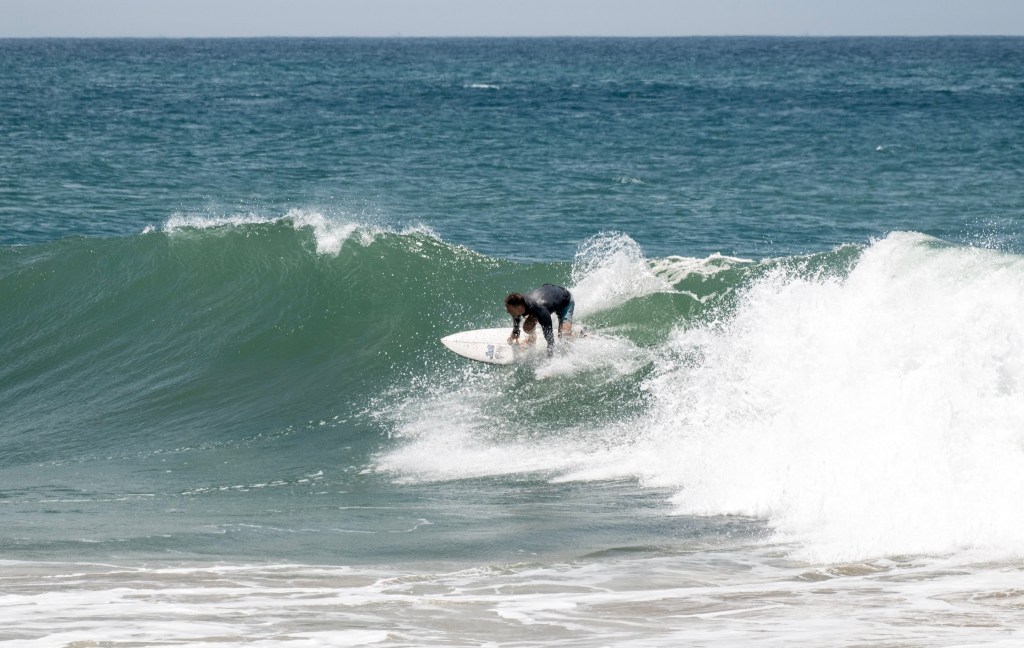
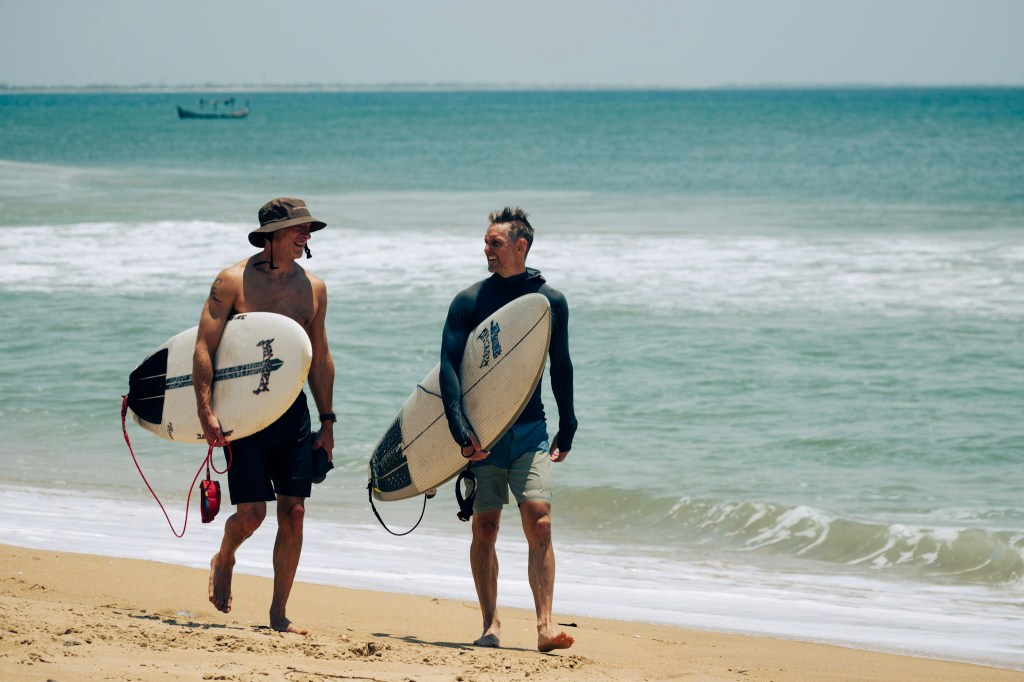
Finally, after eight sweltering hours in the car, we approach the coast. Long before we see the actual beach we can see the spray from the breakwater. The swell arrived early! The wave looks just like it does on YouTube: a right-hander breaking off a breakwater/groyne (or “groin”, as the Americans spell it, which never stops being funny). A bit fast and hollow at the takeoff, before it softens on the inside. It reminds us of a sand-bottom version of Boilers in Morocco, but wiith water ten degrees warmer and nobody else out. The only other surfer we meet in the water is Gottfried, a local who runs a café on the beach. Still, the wave isn’t exactly easy. With a decent swell there’s a strong rip down the point, and you can’t hold your position for more than a few minutes at a time. After every wave we walk back up the beach behind the breakwater and paddle 30 metres out to the peak. It means timing the sets to avoid being washed right back to the beach to start over, but it’s way easier than paddling against the current all the way back to the peak. Being alone in the water doesn’t mean it’s all peace and harmony: Tommy drops in (according to Jørgen), Jørgen snakes (as always, according to Tommy), and we argue like Statler and Waldorf (White men pushing 50!).
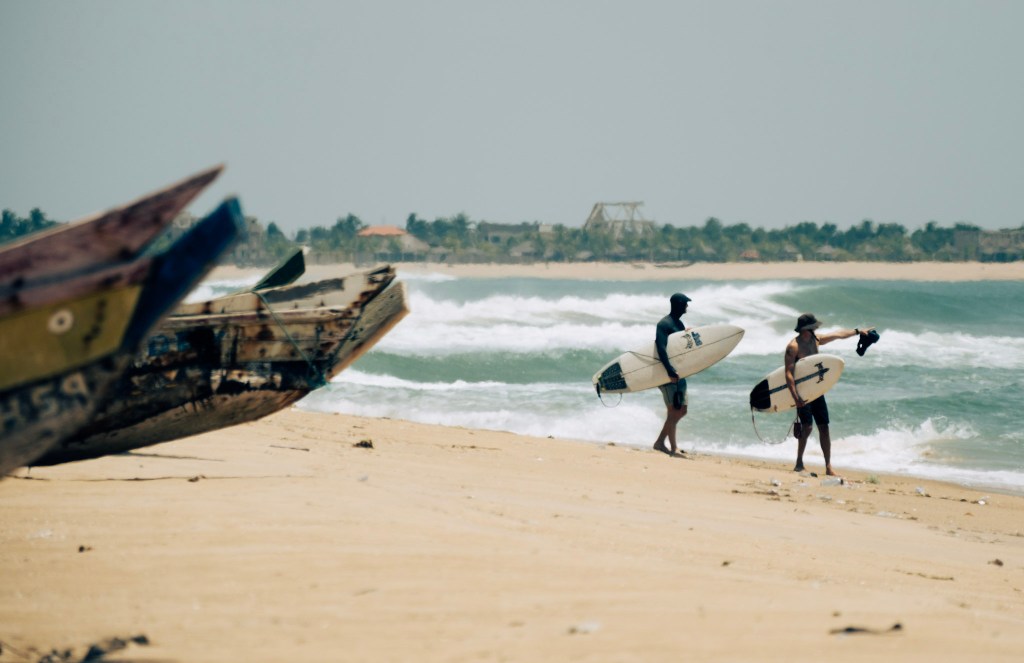
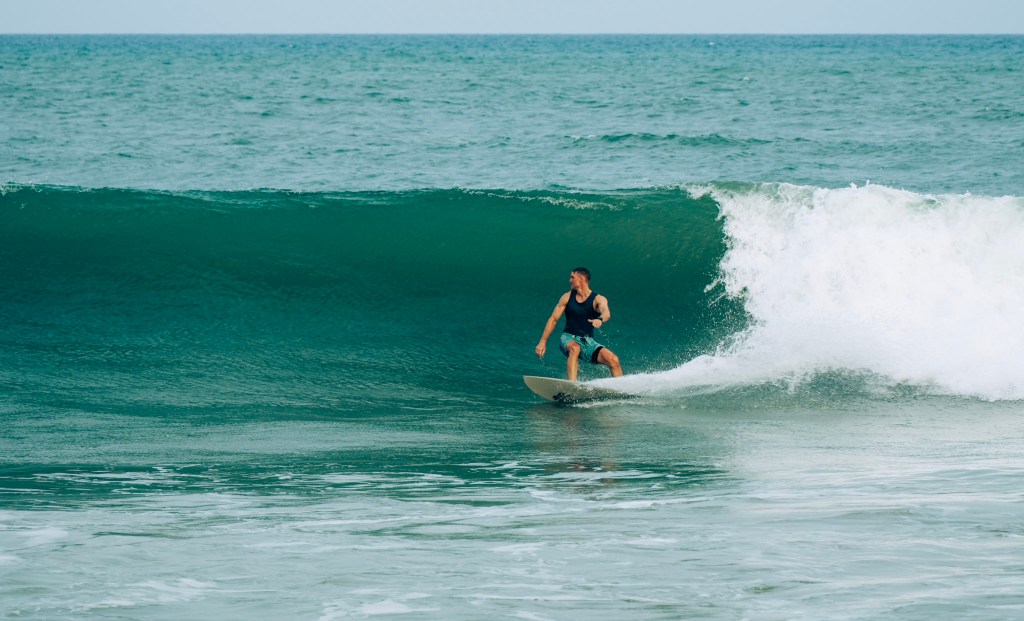
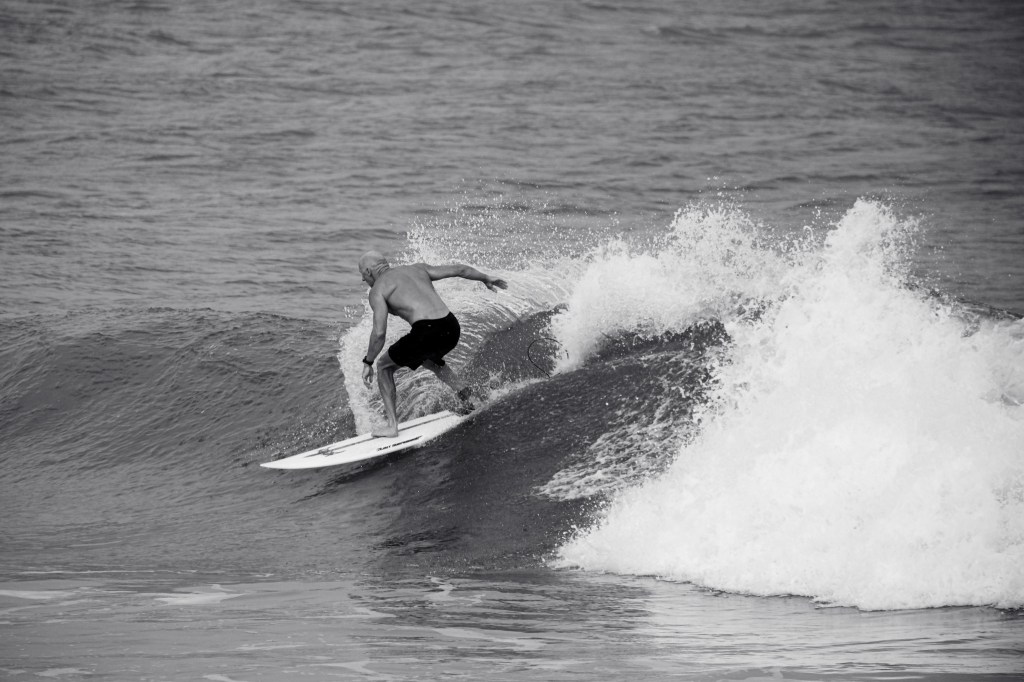
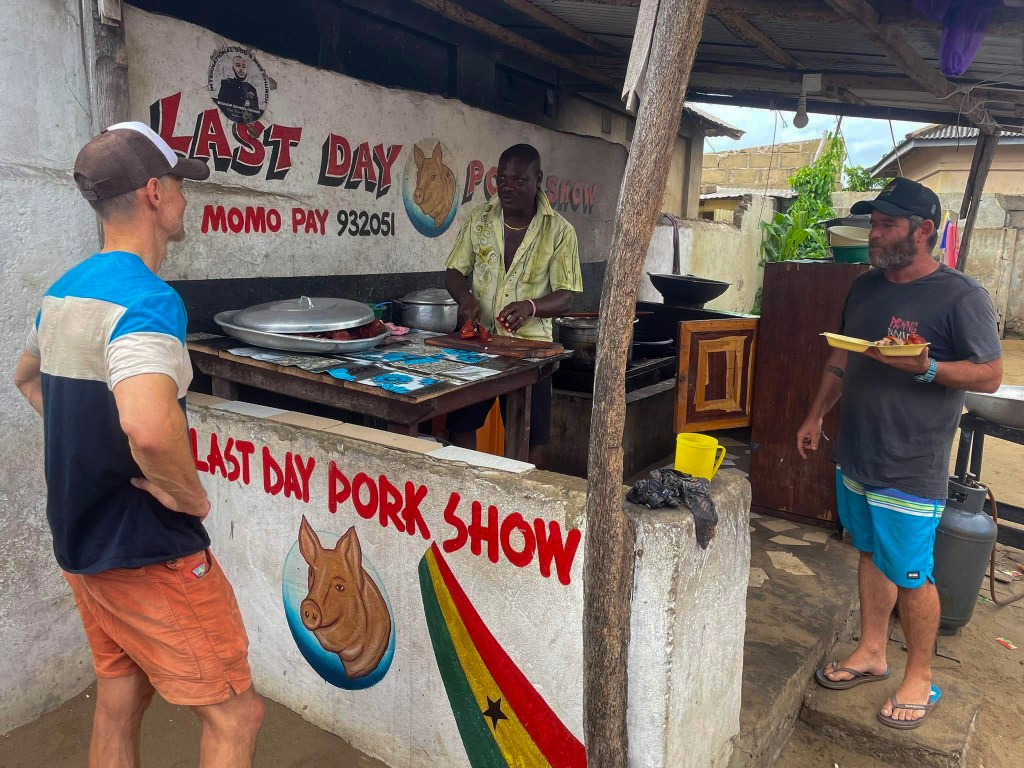
We spend four days in the same town sampling the waves, views, and local cuisine. Apparently, the Ghanaian way is to have a massive, protein-filled breakfast that lasts you all day, so the “Last Days Pork Show” is a must. It means showing up early, certainly before 8 in the morning, to get the best cuts of a spit-roasted pig served by the kilo, with your choice of hot chili sauce. For the Norwegian stomach, it feels a bit like plowing through a full Christmas dinner before you’re even fully awake. Two pork rinds for the road and we’re set for the rest of the day..
We make a half-hearted attempt at another local celebrity: “The Snake”, a notorious, fast, barreling wave a fair way down the same stretch of coast. Finding it takes local knowledge, since it all looks like one endless beach to anyone who hasn’t seen the wave in all its glory before. It’s fun to try, since it was once claimed to be such a fast and tricky wave that only two surfers in the world could make it. We still think it’s doable even for mortals like us, but it’s obvious we’re in over our heads, and all we end up with is sand in our shorts and dents in our self-esteem. We’re pretty happy going back to the machine-like wave at the groin with the chip-in access, and surf it back-to-back like a veritable wave pool for three days straight. Every time our shoulders scream that we’re done, there’s always one more wave for the road.
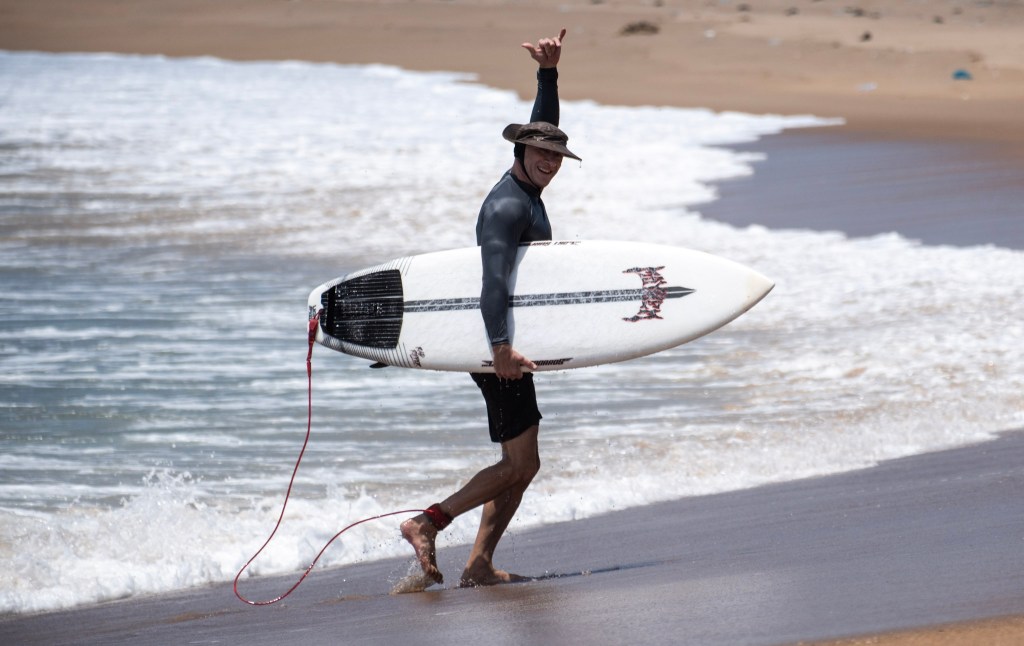
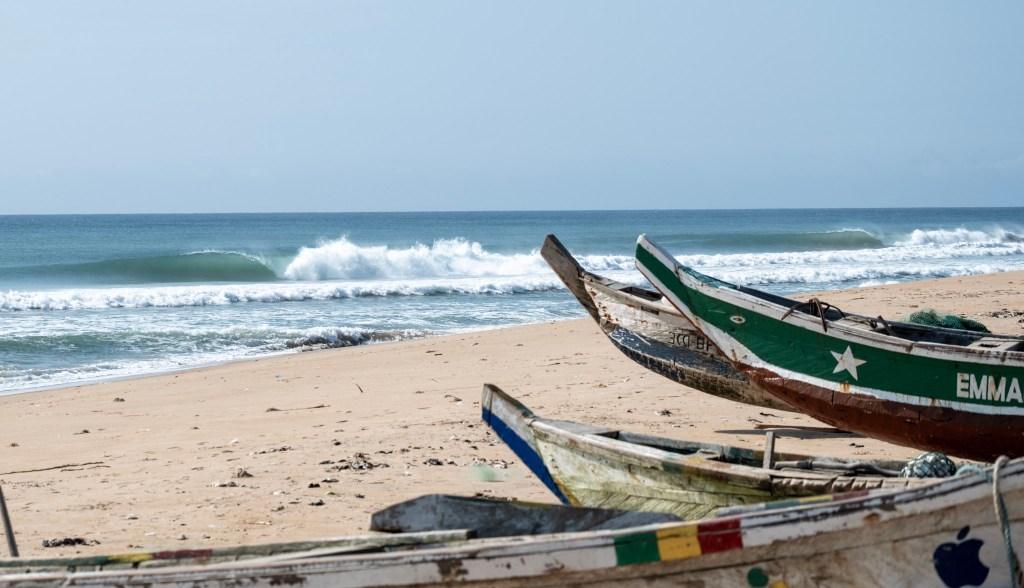
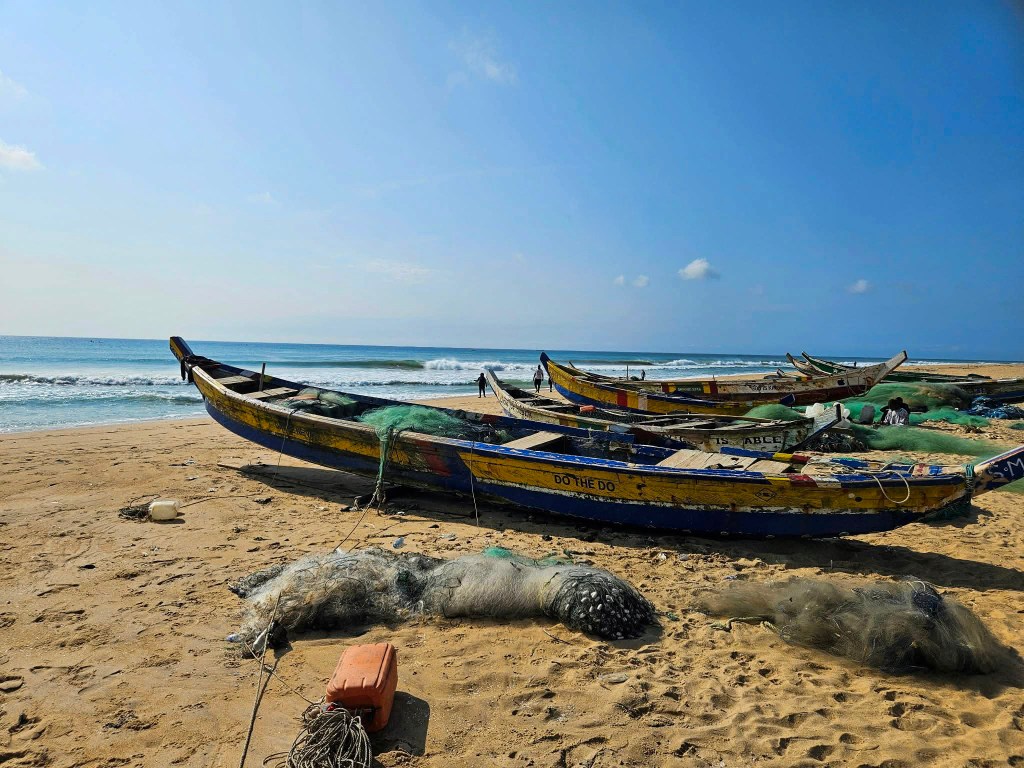
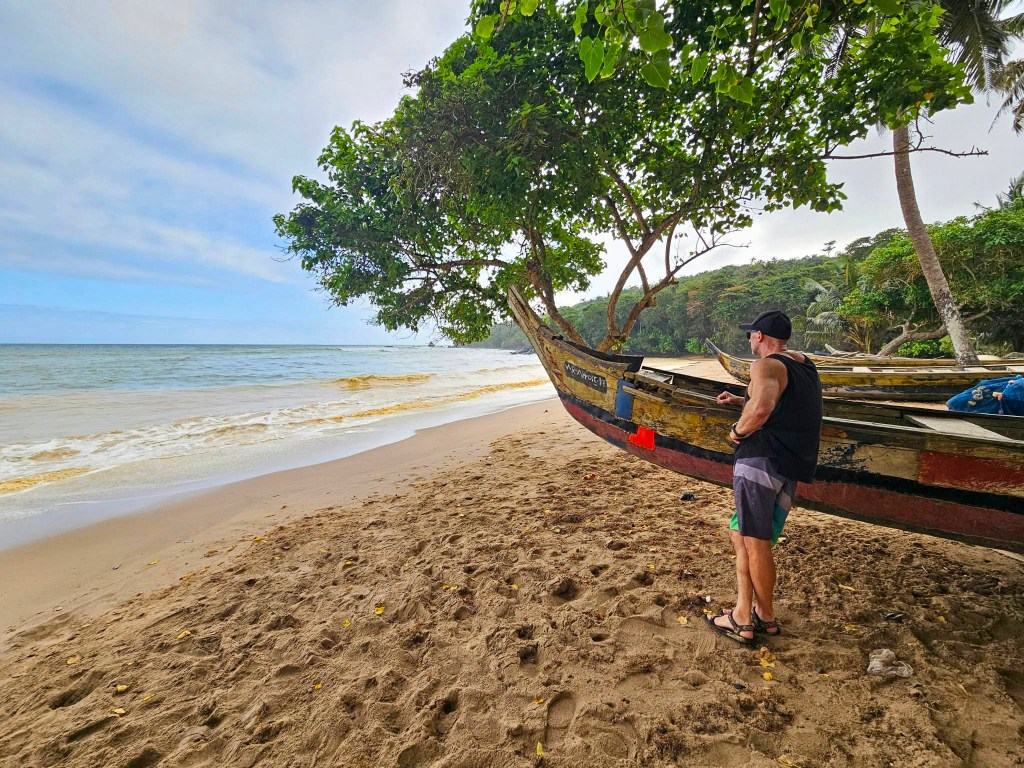
Despite the empty lineups, surfing is nothing new in Ghana. The local fishermen expertly navigate the beach breaks on their way in and out every day in their craft of variable size and sturdiness. Some of the oldest written descriptions of people playing in the waves on boards come from here: the Dutch merchant Pieter de Marees described it on the Gold Coast (present-day Ghana) in 1602, more than 160 years before Captain Cook’s crew described surfing in Polynesia. That doesn’t mean surfing originated in Ghana; people have probably ridden waves in one way or another wherever there’s warm water and surf. But it does mean that Bruce Brown’s crew, who “introduced” surfing to kids on Labadi Beach in The Endless Summer, were a few centuries late. Even so, access to modern boards and gear is poor, and the local groms depend on donations from visiting surfers and organisations like Provide The Slide, a German-Swiss NGO for which Brett Davies is the official partner in Ghana. On several occasions during our trip along Ghana’s coast, we see how he has been, and still is, instrumental in giving local surfers the chance to surf and to make a living from the sport. His “guys” of local surf school instructors and aspiring pros are a delightful and genuinely friendly crew.
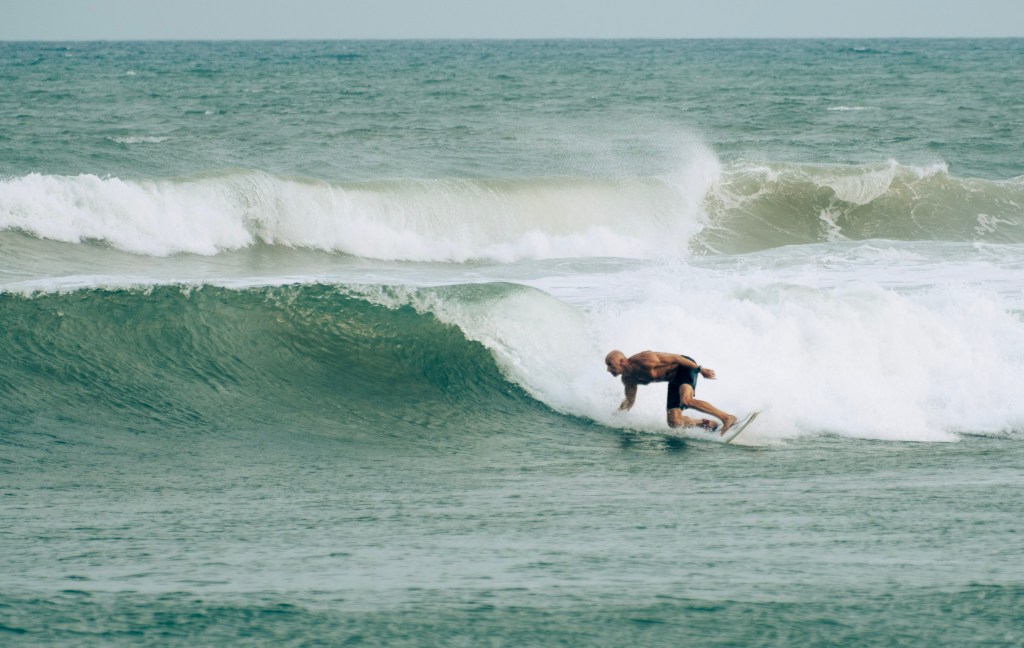
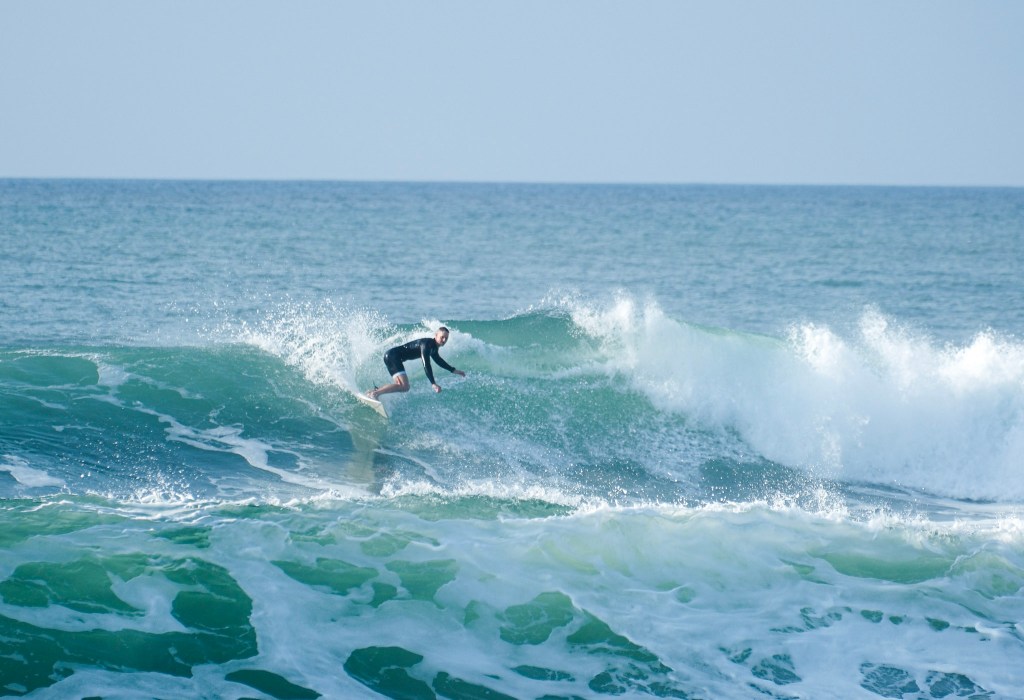
After four days and a pile of waves, the forecast shows there won’t be much more swell in this region. We read up on local customs and find a horror-tinged fascination with voodoo. There’s talk of a shrine in the village of Nogokpo, not far from where we are. “The most feared and powerful voodoo shrine in Ghana,” according to the internet. Finding the shrine turns out not to be very straightforward. After searching for a while, we ask a group of men who seem to have permanent seats in a cluster of plastic chairs by the road, and must therefore be assumed to have some authority. A man with a motorbike offers to take us to the shrine. We ride through villages, swamps, narrow back alleys and muddy jungle tracks, and then we’re there. We buy a bottle of mandatory schnapps and get hold of the loincloths all visitors have to wear. Off with watches, caps and sandals. Despite our staunch atheism, we approach the shrine with a certain awe. Taking photos is strictly forbidden.
We enter a hall where rows of people sit silently, waiting. We take our seats on a bench and wait with them. It’s reverent in an uncomfortable way. We regret the whole thing; it doesn’t feel right to be here, to turn up half as a joke. This is absolutely serious business. Soon we’re called up to the priest. A young, somewhat menacing guy, with scarred tattoos around his eyes (but also AirPods and a pink iPhone), entirely in line with our Hollywood-shaped expectations of what a voodoo priest should look like. “What do you want?” he asks sourly. “Uhh, we surf, and we’d like to make a small offering to Mami Wata, the water spirit, to get good surf”, we mumble. “Good God, how stupid can people be?”, we imagine him thinking. “Mami Wata isn’t in this shrine. This is the supreme court of voodoo, and the home of Mami Vena, the Thunder Ghost herself, merciless punisher of sinners with sudden illness and mental ruin”. The shrine is so feared that there’s zero crime in the town and no need for any kind of police. People come here when they believe the justice system has wronged them, or with specific problems they want fixed – like a thieving neighbour. Apparently the mere threat of Juju from Mami Vena will make any man repent and make amends. No, Mami Wata is not here, and the priest starts questioning us to see whether we really have any tangible problems worthy of his time. He is clearly not very impressed. In any case, he demands around 7,000 kroner from each of us for the privilege of meeting the Ghost. The priest refuses to believe we don’t have that kind of money on us and gets pretty grumpy. With spooky Hollywood images of voodoo in our heads, our minds start racing: what happens now? Will we be held hostage? Sacrificed? Will the priest throw some evil juju on us? We’re already tired from paddling, and now we have to back-paddle like never before. Many apologies and explanations later, we leave the shrine with our tails between our legs, schnapps and wallets intact. Memorable? Yes. Fun? Far from it!
The next morning, thunder cracks through our hotel room. There wasn’t a hint of a cloud when we went to bed. Damn. Has a curse been cast on us? Strangely, the sound isn’t coming from outside. It’s coming from inside the room. The bathroom, to be precise. Jørgen’s stomach has been hit by juju! We have 12 hours of driving ahead of us. That’ll be two Imodium for the road.
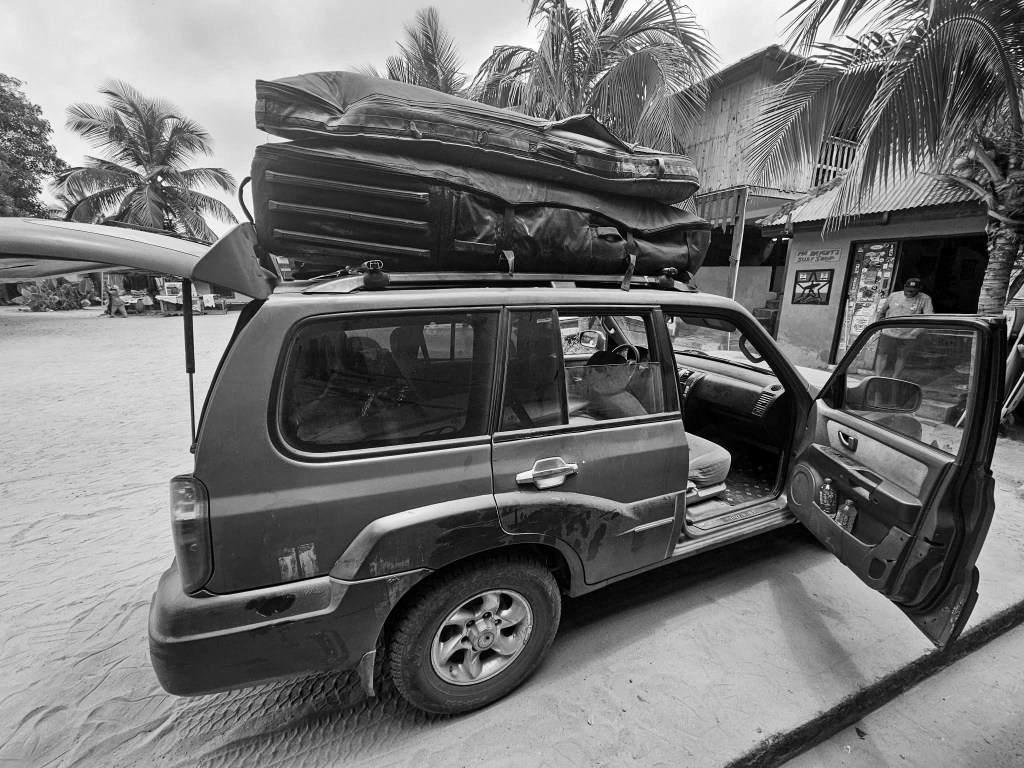
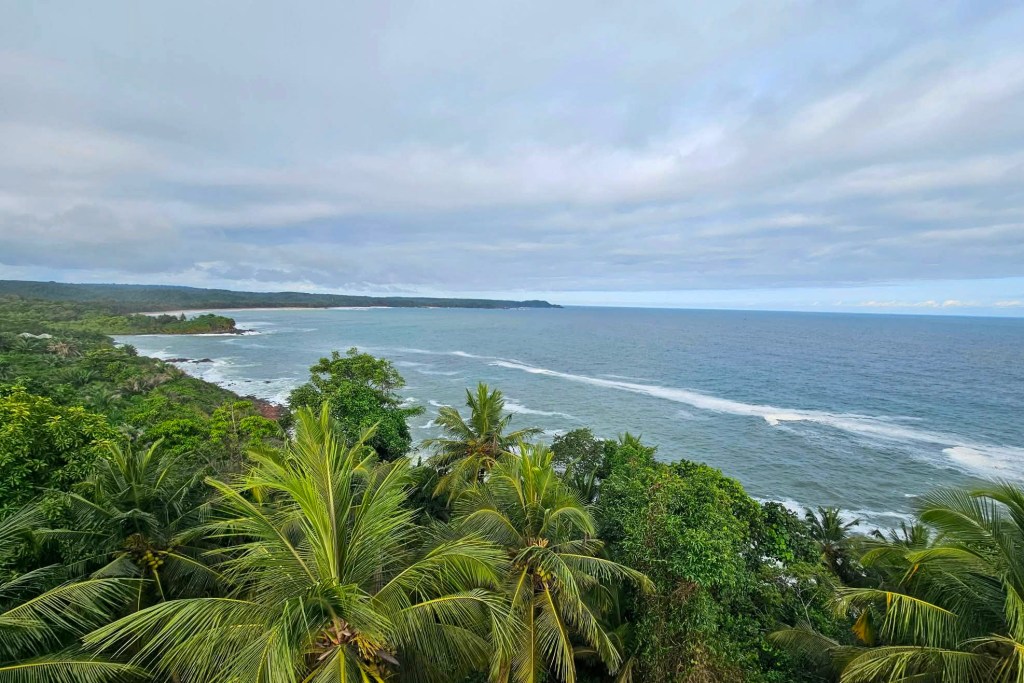
The swell is dwindling, but it looks like there could be something on the way to hit out west. We drive the entire coast from the east to Cape Three Points in the west in our dust filled dry sauna. We wake up at Busua Beach, another one of Ghana’s surf hotspots. We’re not exactly blessed with swell so we can’t really tell if the breaks here are as good as they say, but the quaint town and beach community is worth a visit. Jørgen’s stomach still rumbles loudly, only masked by the roar of the faulty exhaust of our car. Along the way we visit an old slave fort – now a museum to remind us of a dark chapter in our joint history.
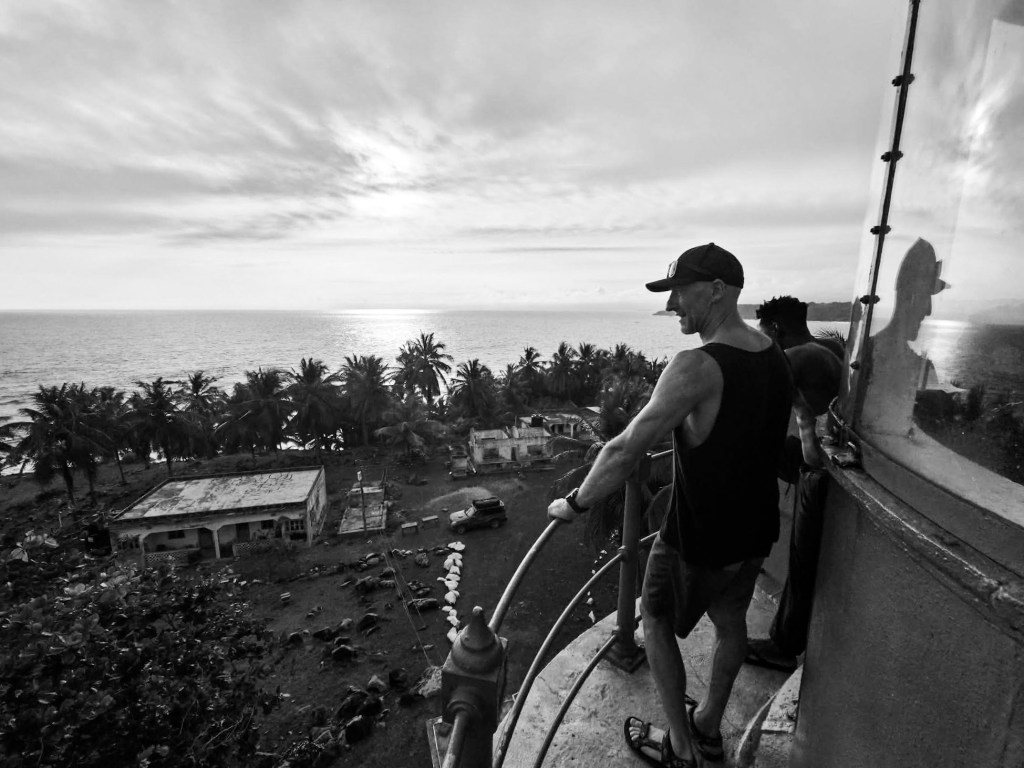
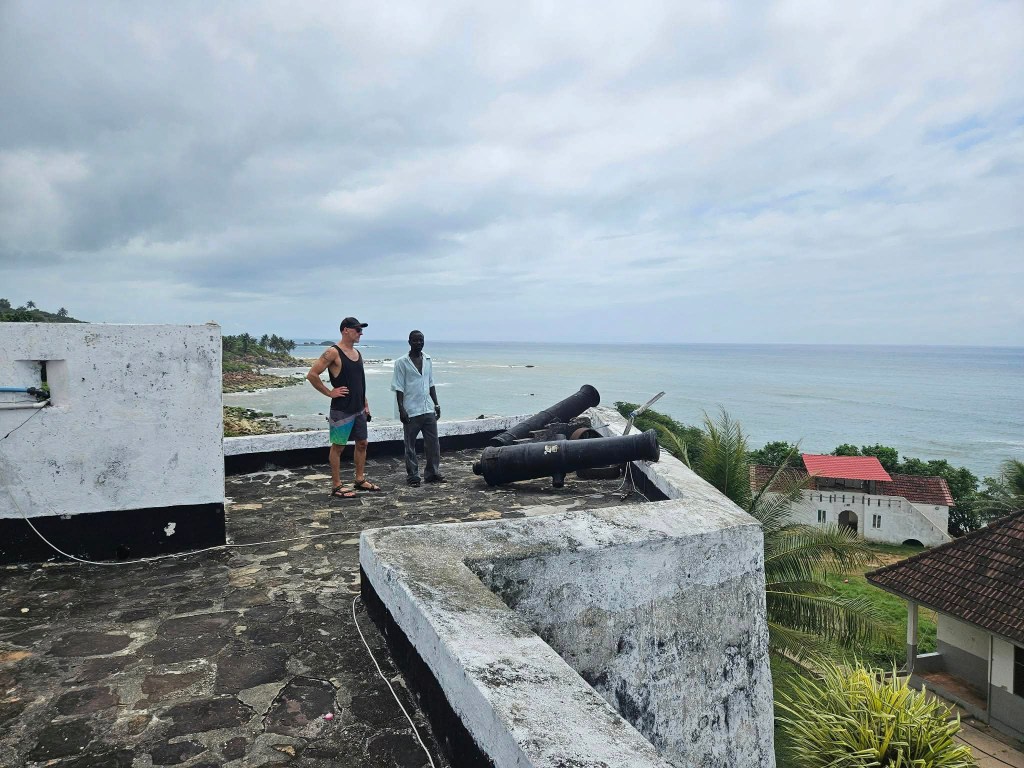
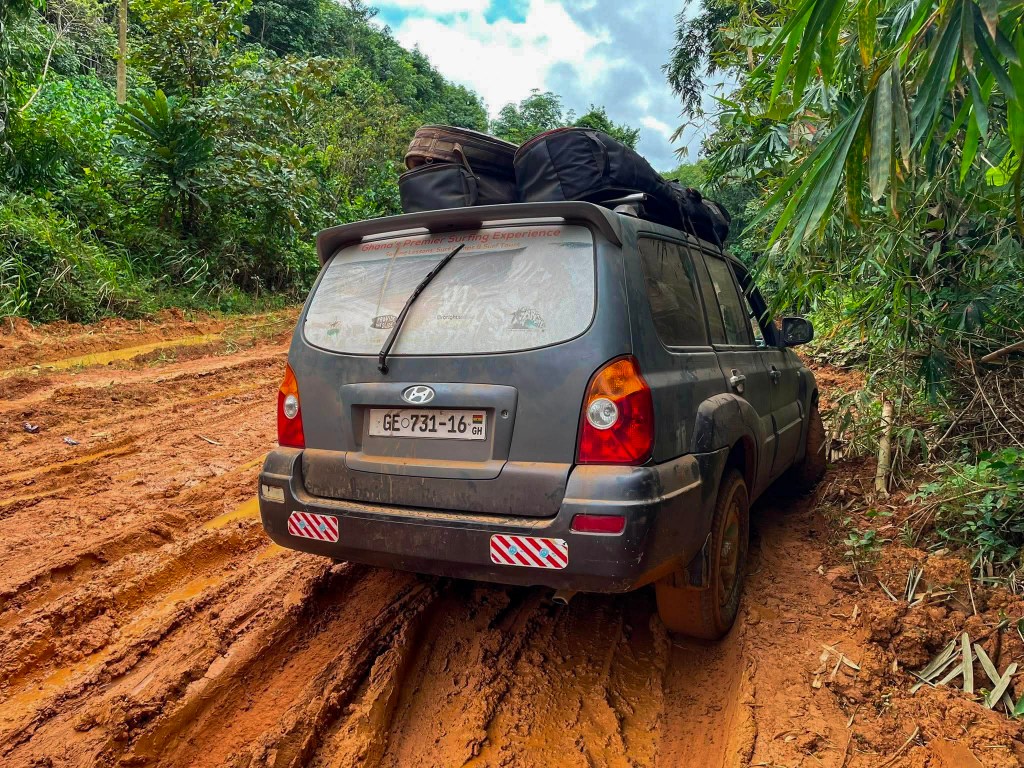
We even have a few unplanned stops due to engine failure, and get seriously stuck in the mud in the middle of the jungle on what was supposed to be a short cut to get to the Eco lodge at Cape Three Points. Thankfully we get rescued by illegal gold miners with a proper tractor and a friendly bus driver who can see that Brett, his driving course notwithstanding, lacks the necessary expertise to navigate a jungle road that was once solid but is now mostly liquid.
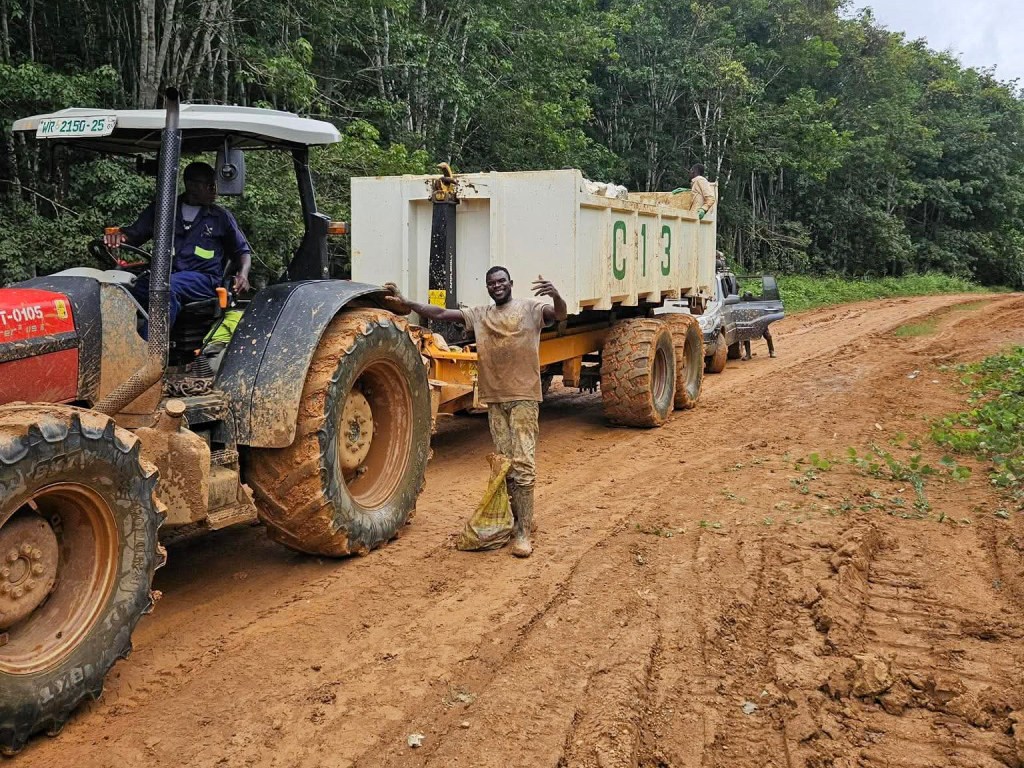
Post-pandemic inflation in the gold price has turned illegal gold mining into big business in this part of Africa. Criminal organisations and certain local “authorities” who now can make money like Pablo Escobar, do so at the expense of smallholder farmers, who are always left holding the short end of the stick when their farmland and water supplies are poisoned with cyanide and mercury at the hands of the miners who themselves are working under dire circumstances. The scars of their activities are scattered all across the thick tropical forests that we pass along the way.
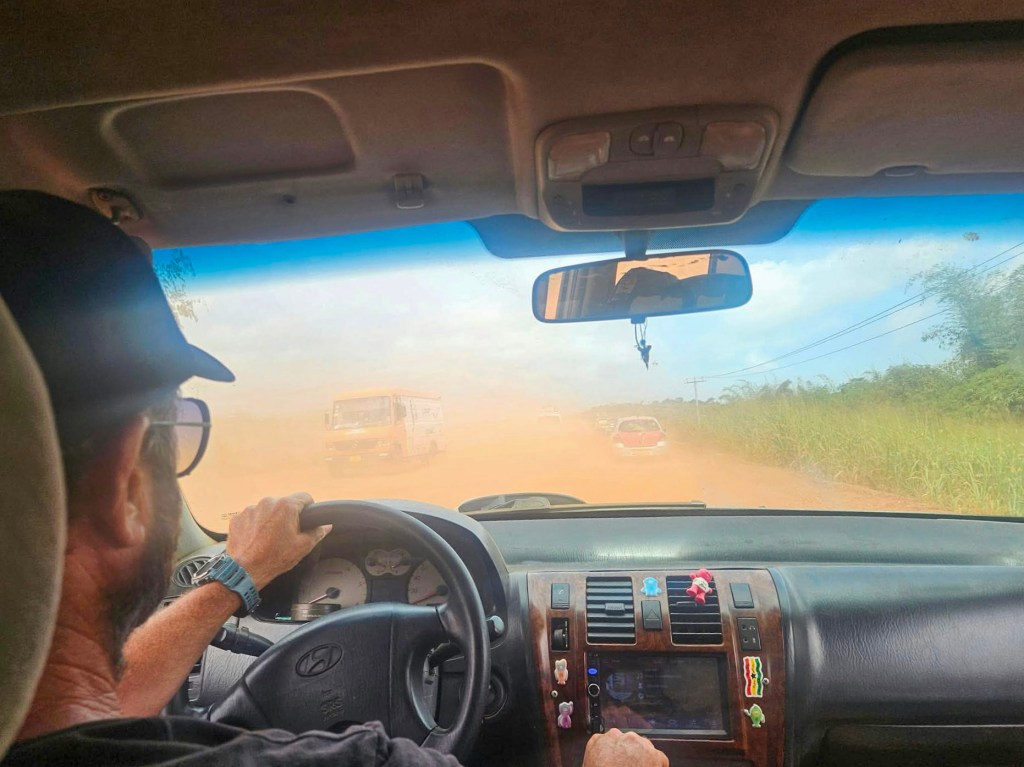
By regional standards, Ghana is a relatively well-functioning society, but in many places it is very clear that the inequalities are huge, and that some people are considerably more equal than others. One morning we roll up at what is supposedly one of the better point breaks in western Ghana. The village on the beach is extremely spartan, almost a caricature from our European point of view. The fishing has reportedly collapsed after Chinese trawlers helped themselves generously from the ocean’s larder, and the river running out onto the beach is dirty, brownish-yellow and foul-smelling because of the illegal mining. It is with mixed emotions that we drive on, with a car full of shiny surfboards, bottled water and protein bars, against this backdrop.
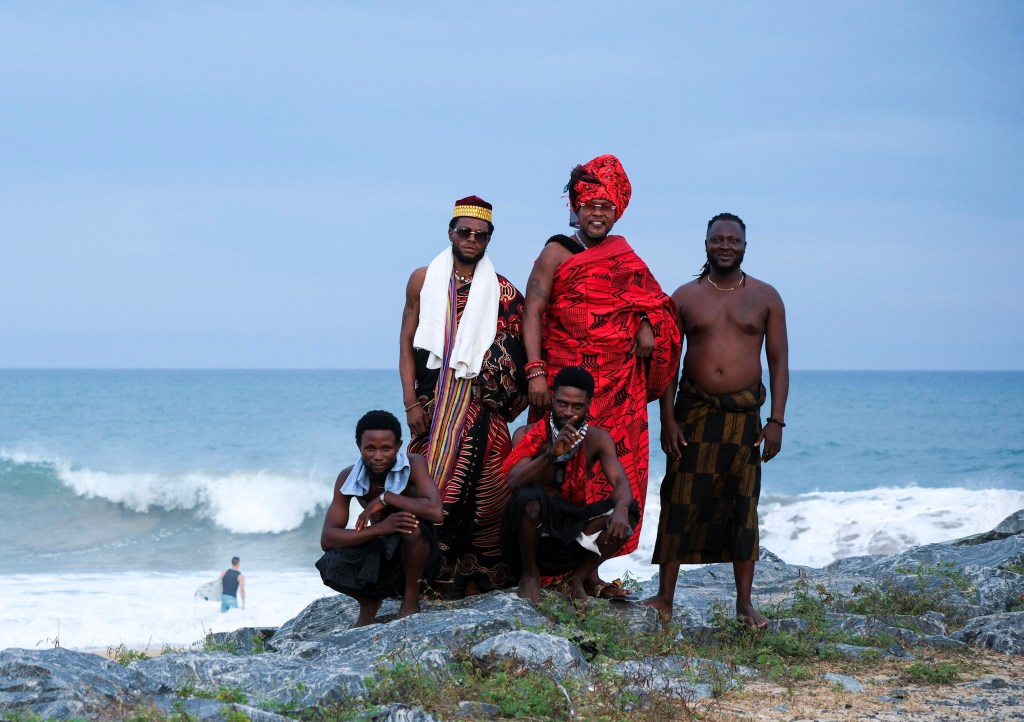
We clearly haven’t appeased Mami Wata or any other spirit for that matter, because the swell never shows during our last days on the tour. None of the waves we visit along the Cape Coast pick up to surfable size, even though they’re said to be really good when it fires. We experience what some may say is the downside of surfing in Ghana: the storms in the South Atlantic are so far away that there’s relatively little energy left by the time the swell reaches the coast here. As most surfers know too well, you need a bit of luck for the swell, tide and wind to align. Even so, Ghana does have a fairly long exposed coastline with steady incoming smaller swells from the South Atlantic, and plenty of places to catch some surf for people happy with run-of-the-mill beach breaks and more mellow setups. Once in a while it really fires, and like we’ve been fortunate to experience first hand, it can be properly epic. You just need to be in the right place at the right time. The four-day run we had at that magical point, we’re told, was a real stroke of fortune, so we’ll have to be content with having scored exactly what we’d dreamed of before we came. A few days after we return home another proper swell hits the east and Brett sends us photos of his “Guys” shredding the groin to pieces on what he coined the swell of the year. Had we extended our trip by a week that could just as well have been us. It goes to show that planning a surf trip one year in advance can be both hit and miss at the same time. Without Mr Bright’s intimate knowledge of the conditions for each spot, our trip might have been a complete miss altogether. A surfari on a tight schedule into (for us) uncharted territory strongly benefits from expert guidance – a lesson for the road.
———————————————————————————-
GALLERY


Leave a Reply