
Words by Kenneth Erlandsen
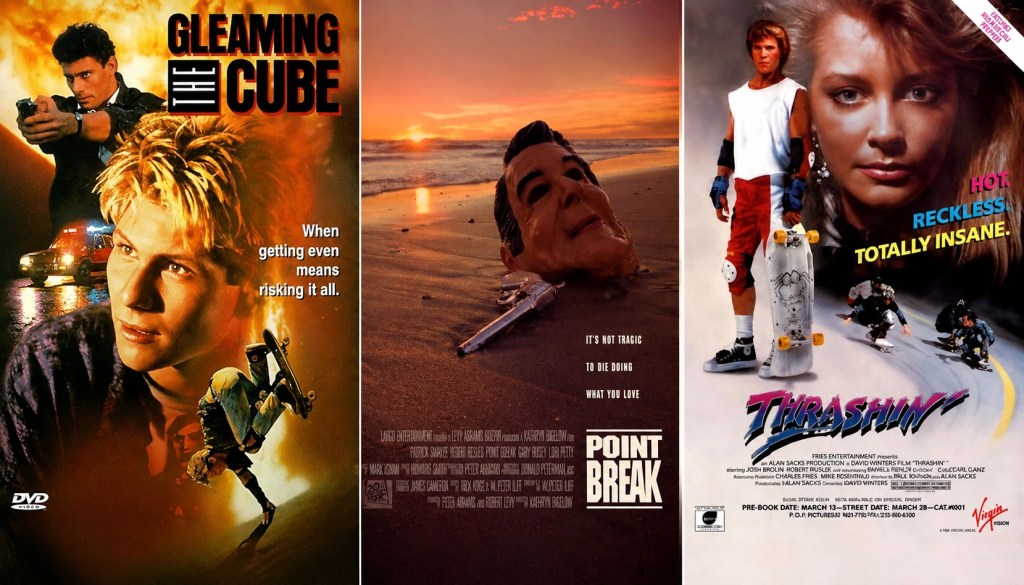
For decades, Hollywood has tried to turn board culture into commercial entertainment. The result has, more often than not, been films that use board sports as set dressing while badly missing the mark on the very cultures, scenes, and people they claim to portray. With one exception. A 35-year-old heist thriller.
A recent re-release of the 35th anniversary of Point Break (1991), with special theatrical screenings in the US, was enough to send me back to something I’ve wondered about for years: why Hollywood so rarely manages to make boardsport films that actually work.
The anniversary took me back to my own teenage years in the late 80s and early 90s, and I revisited three Hollywood films built around boardsport themes — Thrashin’ (1986), Gleaming the Cube (1989), and Point Break (1991). Films released only a few years apart, yet with wildly different afterlives worth reflecting on in 2026.
Three films, different approaches
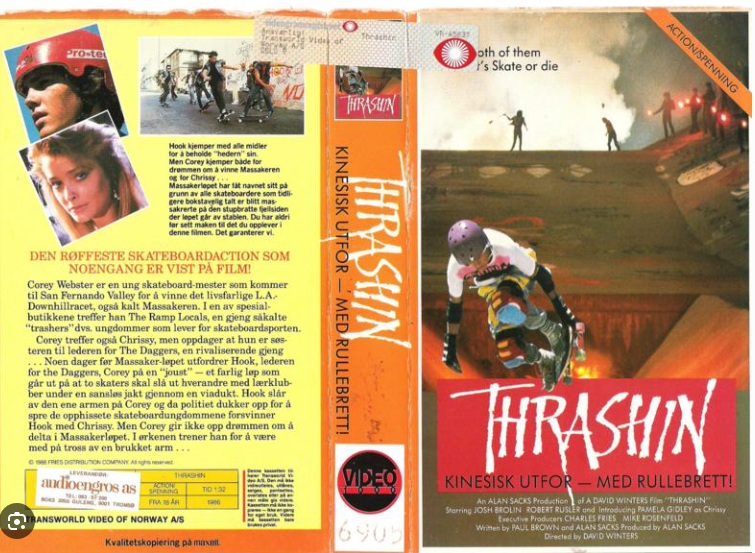
Thrashin’ arrived at the peak of the first skateboarding boom in the US, in 1986. It flopped commercially, went almost straight to the video rental market, and was forgotten. Three years later, when the skateboarding ban was lifted in Norway in May 1989, Thrashin’ got its Norwegian renaissance. Not that strange, really. Norway in 1989 was years behind other countries when it came to trends, and long before the digital age, we soaked up whatever scraps of skateboarding we could get on a screen.
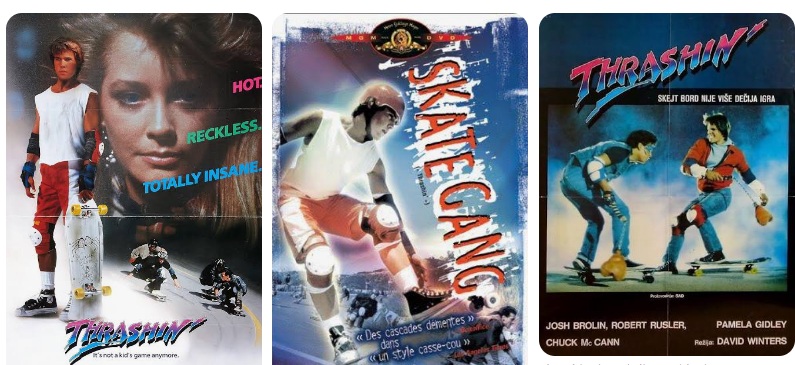
The plot follows rival skateboard gangs in Los Angeles, the Daggers and the Ramp Locals, mixing teen drama, romance, and action-sport film into a classic Romeo and Juliet setup, where the lead, Corey (Ramp Locals — the good guys), falls for Chrissy, sister of Hook, leader of the Daggers (the bad guys).
The actual skating in Thrashin’ was good, and it was the only reason we fast-forwarded through the rest of the plot and lingered on the skate parts. A bit like with porn films — you’re really only there for one thing, and it is NOT the plot. Then a friend borrowed Bones Brigade’s Future Primitive from an older kid in the neighborhood, and it changed everything. Now we understood what skating was actually about, and it wasn’t rival gangs with dumb names wrecking each other’s ramps and warring in the streets. Skating was the opposite of Thrashin’ — a global culture with shared references and frameworks, and a language that crossed borders.
“We traveled around Europe by train, with nothing but a backpack and a skateboard. No matter which European city we stepped off in, we found skate scenes that welcomed us with open arms, invited us to parties, let us sleep on their couches. The complete opposite of everything Thrashin’ was about. That film was just Hollywood garbage,” a skater from the early Norwegian skate generation once told me when we got on the subject of boardsports and Hollywood adaptations. Spot on.
Three years after Thrashin’, skateboarding exploded as a global phenomenon. Hollywood wanted a piece of the trend and made Gleaming the Cube in 1989, in which Christian Slater got his breakout role as a skater investigating his brother’s mysterious death.
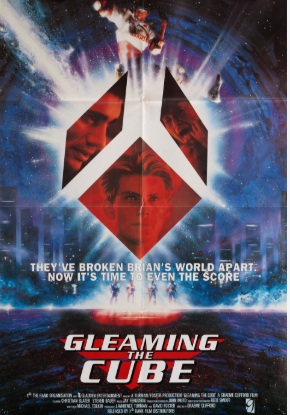
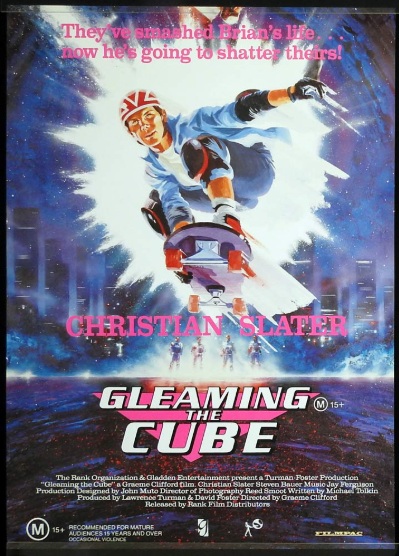
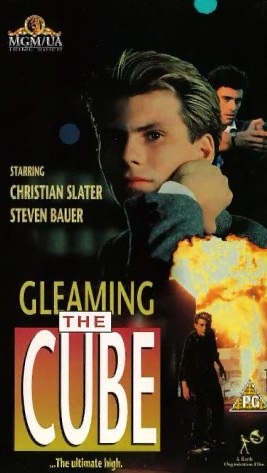
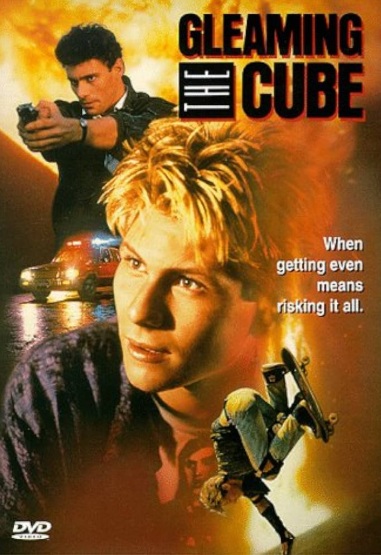
My crew didn’t even bother seeing it in theaters. We knew the drill. This was dumber than Thrashin’. I seem to recall we rented it on video when it came out and were bored out of our skulls.
Both films met the fate they had to, when filmmakers with no real insight into youth culture try to package cultures they don’t have the faintest clue about into entertainment — they crashed and burned. Both commercially and culturally. On a budget of 10 million dollars, Gleaming the Cube brought in just 3 million, and the reviews the internet can still dig up in 2026 point to a distinctly lukewarm reception, torn between reading it as a teen film and a Cold War thriller.
Thrashin’ got only two reviews in American media after its release. Say no more.
A Hollywood film from 1991 built around surfing, however, met an entirely different fate than its two skateboarding predecessors. Director Kathryn Bigelow based the Point Break script partly on author Kem Nunn’s iconic 1984 surf-noir novel, Tapping the Source — a novel about a young man searching for his missing sister, a search that leads him into a closed, criminal surf scene in Huntington Beach, California. As in Nunn’s novel, where the crime story is the backbone and the surfing more of a backdrop, Bigelow used the same device. And it was a smart move, because it gave both the book and the film several parallel threads, portraying a criminal underworld, a surf scene, and men wrestling with identity, direction, and their place in society. Themes that feel just as relevant today as they did in the 80s and 90s.
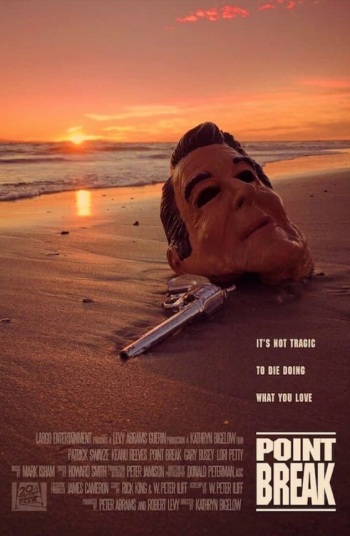
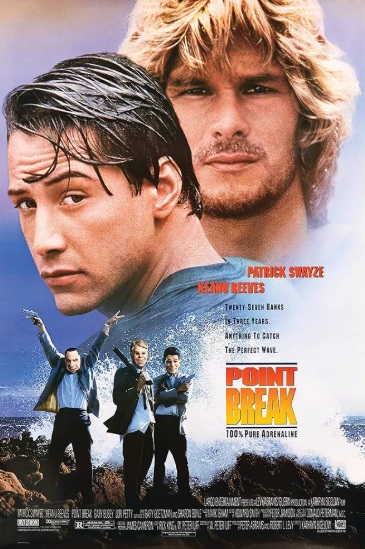
What my skate crew thought of Point Break? The film came out at a time when my group of skaters had started at different high schools and had drifted a bit apart. But I remember we all loved Point Break, and that it got us hooked on everything related to surf culture. Something we’re still into to this day. So on behalf of my crew from the glory years of the late 80`s — thank you, Point Break
Why Point Break survived (and the other two kinda didn`t)
Looking back at the legacies of these three films with what I know in 2026, the differences between them are far greater now than they were at release.
Thrashin’ and Gleaming the Cube have, despite their flaws and their lack of cultural accuracy, still earned a kind of cult status among the generations of skaters who were teenagers in the late 80s and early 90s. The films live on as time capsules documenting the fashion, music, and skating of their era. But outside that relatively small circle of skaters who remember and have actually seen them, the films are little more than footnotes.
Point Break, on the other hand, has become a cultural phenomenon. Lines, characters, and scenes are still quoted more than three decades later. The film has reached a status that far outstrips its original reception, both among surfers and film critics. It was also a major commercial sucess, grossing 84 million dollars on a 24 million budget.
35 years after its premiere, Point Break stands as a monument among surfers and other boardsport enthusiasts. Over the years it has climbed to a status no other boardsport-related Hollywood film has come close to.
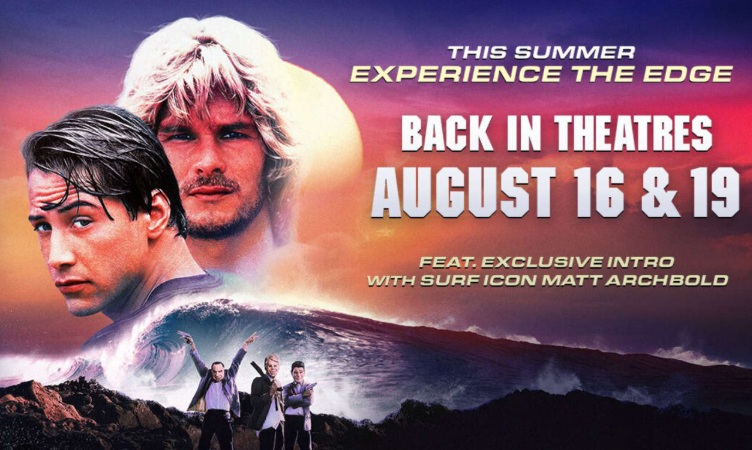
So it was entirely fitting that the film marked its 35th anniversary with a freshly restored 4K version, shown in US theaters over two special screenings in August, accompanied by introductions from surfer Matt Archbold, who worked as Patrick Swayze’s surf stunt double and coached the film’s surf scenes during production. He also contributed significantly to the film’s authentic surf style.
A complicated relationship
To sum it all up, the biggest difference between these films lies in how they’re perceived by the very communities they depict.
Skaters have a complicated relationship with Thrashin’ and Gleaming the Cube. Both films feature genuinely good skating, but portray people and scenes through Hollywood stereotypes. Watching them again in 2026, they reek of productions made from the outside looking in. A recipe for failure when you’re trying to make films about youth phenomena.
Point Break has earned far more acceptance among surfers, even though its story is every bit as far-fetched as those in Thrashin’ and Gleaming the Cube. Many surfers feel the film actually captures parts of surf culture’s ideals: freedom, the chase for the perfect wave, distance from established society, and a fascination with risk. That’s part of why it has both aged well and grown in stature over the years, as Matt Archbold himself confirmed recently in an interview with the surf podcast The Lineup.
Patrick Swayze’s character Bodhi has become a cult figure in film history, and the role Swayze is best remembered for among boardsport enthusiasts. Even though Bodhi comes across as slightly caricatured, he still represents a romanticized version of values that genuinely exist within surf culture — a kind of personification of surfing’s mythology. And it’s precisely his timeless character that explains much of why Point Break survived while the other films faded into irrelevance. All hail to the late, great Mr. Swayze.
1991 in 4K
So how does Point Break look in its restored 4K version? Absolutely gorgeous. I fired it up on both an OLED screen and an older plasma TV. What, plasma in 2026? Yep. Plasma is still considered unbeatable for black-level reproduction, with extremely fast response times and minimal motion blur — which does Point Break in 2026 a real service. The surf scenes are downright magical in 4K. The film itself needs no fresh review from me in 2026. But I have to add that I’d forgotten how much fun it is to watch Gary Busey again as FBI agent Angelo Pappas. And Patrick Swayze looks like he was carved out of a block of stone. What a physique the then 38 year old Swayze had. Impressive.
35 years after its release, Bodhi’s lines have long since become part of the vocabulary of surf culture — spoken, these days, with a knowing smile. Don`t remember any of them?
Then order your copy of the newly released Blu-ray version and hit the Play button.
Vaya con Dios, brah!!

 27 - 9
Leave a comment