
Book review
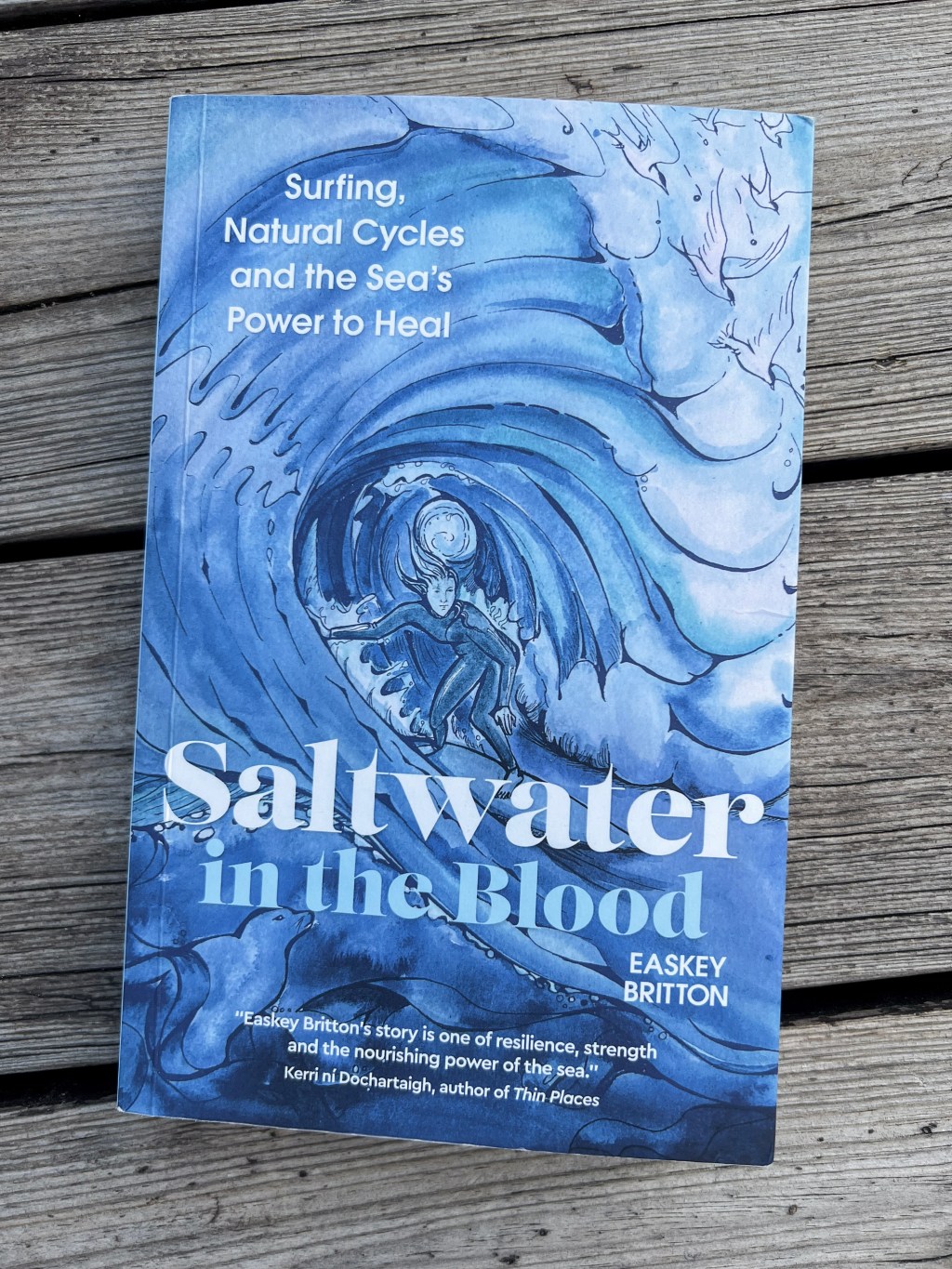
Saltwater in the Blood: Surfing, Natural Cycles and the Sea’s Power to Heal
by Easkey Britton
Words by Kenneth Erlandsen
There are two literary genres I never tire of: surfing and economics. The Misfit Economy is a prime example of a brilliantly entertaining book, aptly subtitled Lessons in Creativity from Pirates, Hackers, Gangsters and Other Informal Entrepreneurs.
But if we stay within the genre 27-9.no writes about, board culture, the 2015 Pulitzer Prize winner Barbarian Days: A Surfing Life by William Finnegan is already a modern classic. The cult favorite In Search of Captain Zero by Allan C. Weisbecker is another surf book I rank highly, as is Welcome to Paradise, Now Go to Hell by Chas Smith. And then there’s the book at hand, Saltwater in the Blood by Irish surfer and marine social scientist Easkey Britton, a new acquaintance for me, even though it was published back in 2021.
***
Already in one of the book’s early passages, author Britton hits a nerve when she describes how her mother, on the way to the maternity ward in the throes of intense labor, insists her husband take a detour along the coast to feel the power of the waves at the then unknown surf spot Mullaghmore. Practically with saltwater still on her face, she arrives at the hospital and gives birth to Easkey who would go on to develop a deep, intimate relationship with the sea and with Mullaghmore Head in particular.
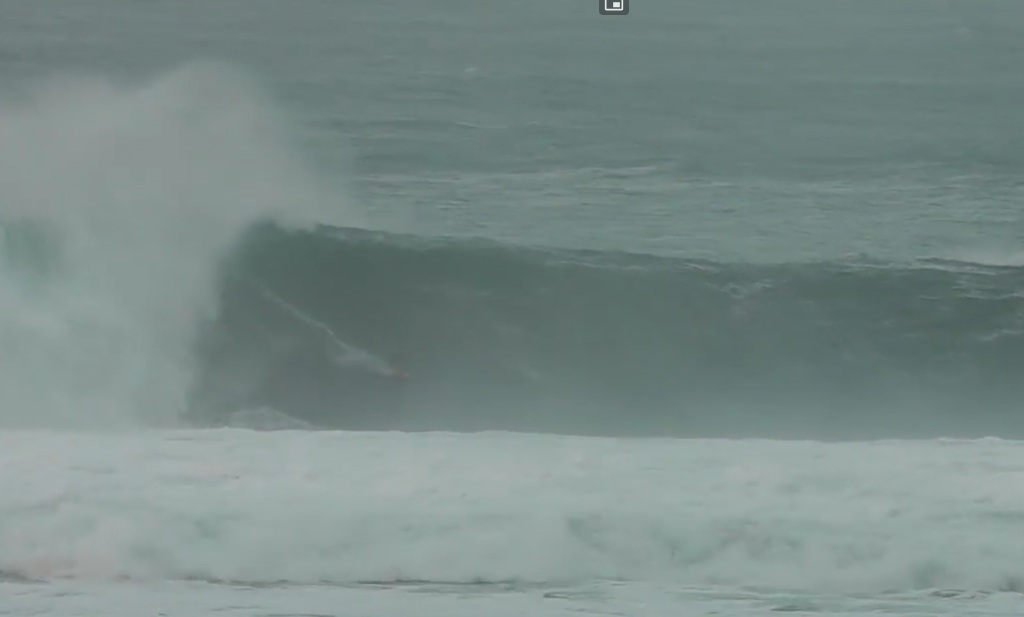
And speaking of Mullaghmore, Britton’s account of her first attempt to be towed into the wave by jet ski is surf writing at its finest, up there with Finnegan and Weisbecker. I can almost feel the raw force of the wave through her vivid prose.
She takes the reader back to a time when Mullaghmore was considered unsurfable, before early pioneers began riding it using tow-in techniques. Today, the wave is widely regarded as one of the heaviest and most fearsome cold-water mutant waves on the planet.
You’ve probably seen footage of Irish surfer Conor Maguire riding the monster in 2020, or Portugal’s Nic Von Rupp surfing it in 2025 and calling it the wave of his life. It’s the very same wave Britton surfed years earlier, earning a nomination for Wave of the Year at the Billabong XXL Awards in 2011.
The section of the book that explores how the author and her collaborators helped establish a surf culture for women in Iran is powerful reading. In a country notorious for restricting women’s rights and opportunities, it’s almost unbelievable what Britton’s surf project achieved under such limited conditions.
In partnership with wetsuit company Finisterre, Britton launched The Seasuit Project in 2022, a full coverage wetsuit designed for women. To date, the initiative has donated 152 seasuits and hijabs to female surfers worldwide. It’s a project that has undoubtedly had, and continues to have, a profound impact on women’s ability to participate in surf culture in countries with strict dress codes.
Reading the chapter about surfing in Iran back in 2014 feels particularly poignant today, as the situation there is very different from what Britton encountered eight years earlier. As I read and write this, war is raging after the United States launched attacks in late February. One can only hope that the people I come to care about in the book are doing as well as possible under such circumstances. Perhaps it is precisely in these extreme conditions that surfing is needed more than ever, as a brief escape from the brutality of war.
***
Have you ever gone for a naked swim, diving your whole body beneath the surface of the sea, and felt what it does to you? If not, try it. Britton’s reflections on the ocean’s impact on our mental health are deeply relatable. They took me back to a time in my own life when I was in the midst of a personal crisis and experienced first-hand the sea’s healing power. It makes perfect sense to me why her mother insisted on bringing that primordial force from Mullaghmore into the delivery room.
I even picked up a new trick from Saltwater in the Blood: throwing saltwater in my face before wingfoiling. It may sound trivial, but try it before any water activity, or even just before entering the sea. I’ll leave the effect undescribed; Britton deserves that you discover it yourself by reading the book.
***
The final part of the book deals with something Britton is especially passionate about: natural cycles and ocean pollution. It’s fascinating to read about the extent to which natural cycles influence human rhythms, and how critical the health of the oceans is to the well-being of the planet.
Britton presents several alarming examples of the state of the world’s oceans. It’s unsettling reading, leaving me highly concerned about the future if we fail to do more to protect them. How do we fix it? A big question, one Britton reflects on thoughtfully. Is the environmental crisis simply too vast for us to fully grasp? Does it demand such long-term investment that those in power cannot think that far ahead? Is modern prosperity so rooted in profit and growth that we fail to see how we are destroying the natural world that sustains us? Are we living such busy lives that we lack the energy to confront what we’re doing to Mother Earth?
These are the kinds of questions I ask myself and the book raises, leaving a bitter aftertaste for my own lifestyles impact on the planet. I own a boat coated with toxic antifouling paint. I wingfoil and paddle SUP using equipment that sheds polluting particles into the sea, the same sea I source my seafood from, the same sea my children swim in.
Are surfers, windsurfers, kiters, and foilers among the ocean’s enemies? These are questions we must take seriously. One thing is for sure; we need to use our consumer power to push equipment manufacturers toward more sustainable practices.
***
“Surfing is my passion. It has been in my life for as long as I can remember. It is what I live for and can’t live without,” Britton said herself during her TEDx Dublin talk in 2013. That quote is precisely why this book is mandatory reading for every surfer, and I’d argue it strikes a nerve that plenty of board sport athletes of all kinds will recognise in themselves.
That said, I believe the book raises so important and under-discussed questions about the ocean’s effect on human mental health, that it could easily earn its place as required reading in middle and high schools world wide.
Saltwater in the Blood is an important book that’s just as relevant — if not more so — than it was when it came out in 2021. It deserves a wide audience, and in my view, it’s mandatory for anyone involved in water-based board sports.
The book earns a secure place on the list of my all-time favourite surf books, and I wouldn’t be surprised if it lands on yours too.
About the Author
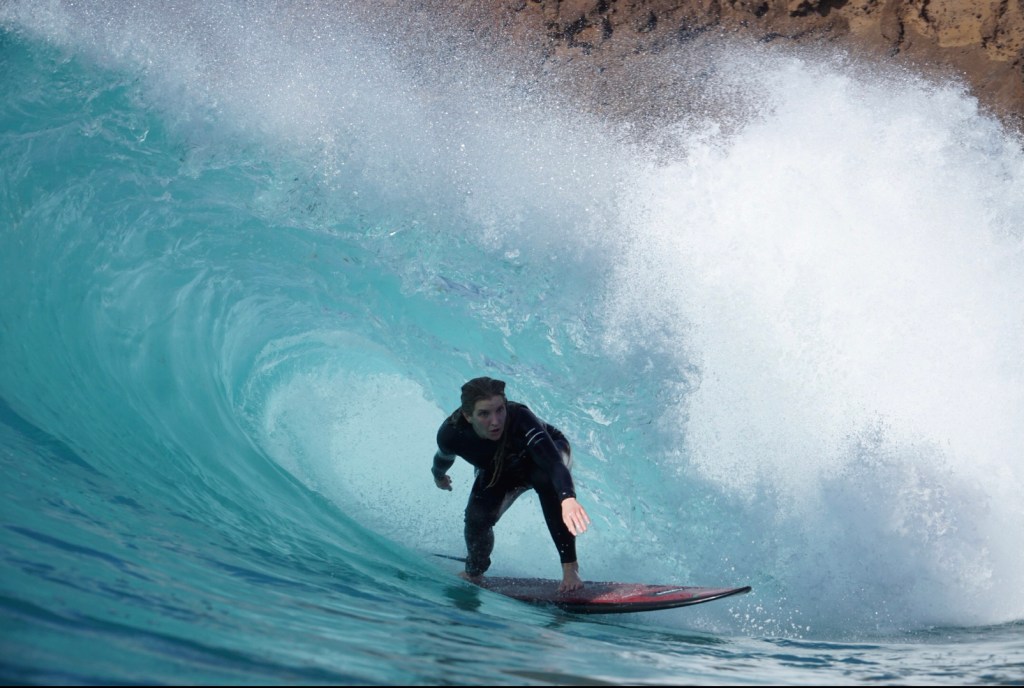
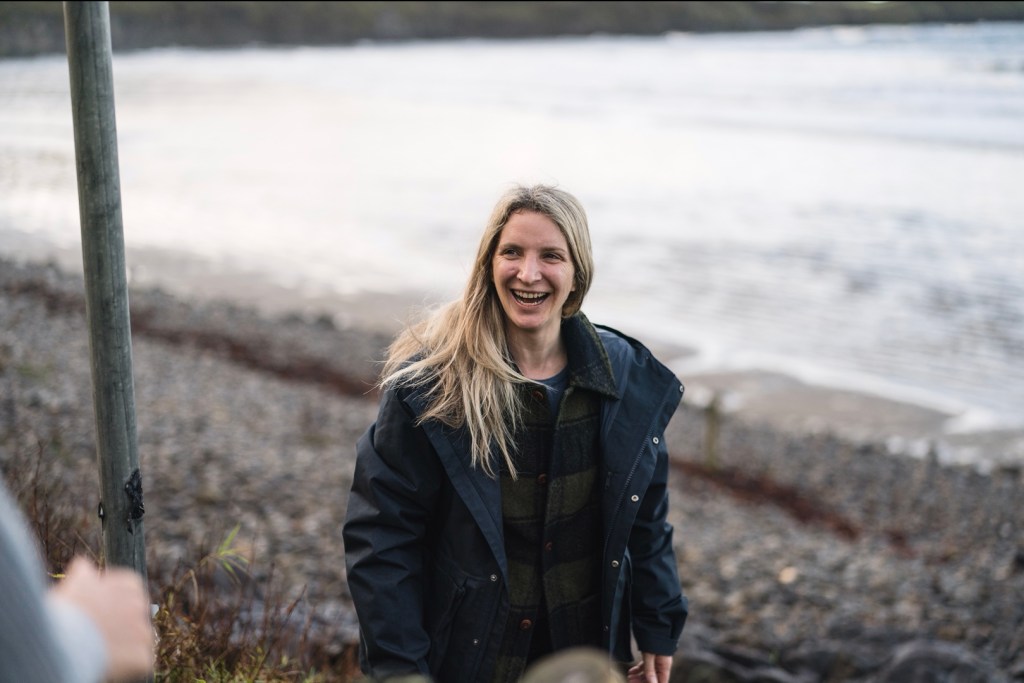
Dr. Easkey Britton is a surfer, writer, artist, filmmaker, coach and marine social scientist, holding a PhD in Environment and Society. Born in Rossnowlagh, County Donegal, surfing was woven into her life from the very beginning, as she was taught to surf at the age of four.
Britton became the first Irish person to surf the notorious big wave Teahupoo in Tahiti at just 16, and is a five-time Irish national surf champion. She is also the first Irish woman to be nominated for the Global WSL Big Wave Awards
She is the founder of Like Water, a platform exploring innovative ways to reconnect with ourselves, our environment and each other, through water. Her books on our relationship with water include 50 Things to do by the Sea, Saltwater in the Blood, and most recently Ebb and Flow: Connect with the Patterns and Power of Water

 27 - 9
Leave a comment